
Reviewed · TOURS
Shared Tour Colombian Conflict War, Drug Trafficking & Peace
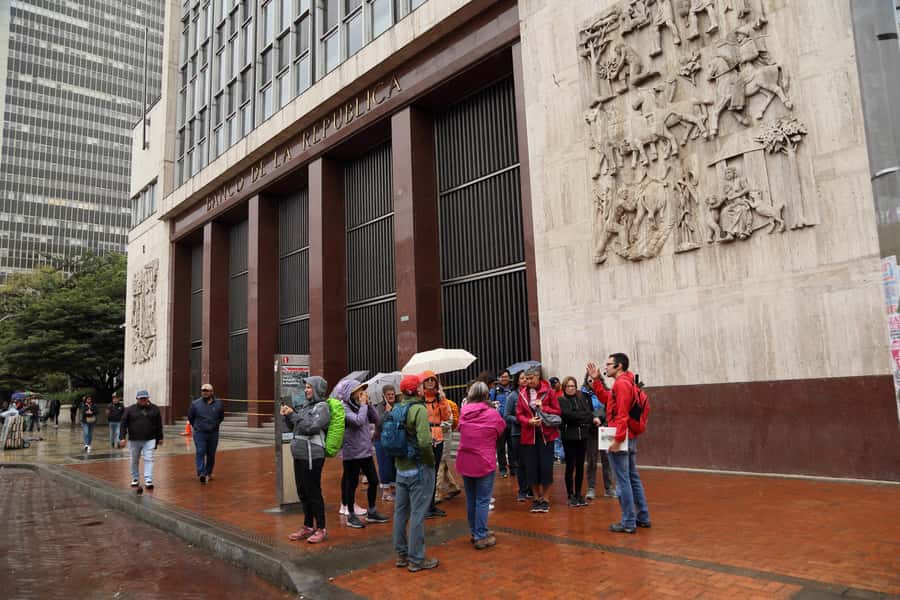
Bogotá history hits hard. This shared walking tour connects Colombian conflict to the historic center, starting right by the Museo del Oro. You’ll follow the story of why violence took root, how politics fueled it, and how today’s armed groups still shape daily life.
I really like that the guide aims to be objective, not partisan, while walking you through turning points like the Bogotazo (the 1948 Bogotá riot) and the long power struggle between Liberals and Conservatives. I also like the way the tour is built for discussion, so you’re not just listening to dates—you’re getting guided explanations and questions as you go.
One real consideration: you’ll walk close to 9 km over about 150 minutes, so this isn’t a sit-and-stroll history class. If you’re expecting very detailed breakdowns of the current political context every step of the way, the depth can vary depending on the guide and the pace they set.
In This Review
- Key Highlights You’ll Feel in This 3-Hour Walking Tour
- Why This Conflict-Era Walk in Bogotá Works
- Price and Value: $13 for a 150-Minute History Reality Check
- How the Tour Flows: From Independence to Today’s Armed Groups
- Independence and early political conflict
- Liberals vs Conservatives: supremacy battles
- The violence era mood shift, including the Bogotazo
- Military dictatorship and political tightening
- Guerrillas are born: FARC, ELN, and M-19
- Drug trafficking ties: when conflict and economics collide
- Peace agreement with FARC
- Current armed groups and why they’re fighting
- The Historic Center Stops: What You’re Really Seeing
- The Guides Matter: What Styles You Might Get
- Practical Stuff: Walking 9 km Without Turning It Into a Slog
- What to bring
- Rain and the umbrella confusion
- Not allowed
- Keep your belongings close
- Finding the meeting point
- Logistics You Should Plan For (Without Making It Complicated)
- Accessibility Note: A Quick Reality Check Before You Book
- Who Should Book This Tour, and Who Might Want a Different Plan
- Should You Book This Bogotá Conflict History Tour?
- FAQ
- FAQ
- How long is the tour?
- How much does it cost?
- Where do I meet the guide?
- What language is the tour in?
- What does the tour include?
- Are tickets or entrances included?
- What should I bring?
- What’s not allowed during the tour?
- Is the tour good for kids?
- Is it wheelchair accessible?
Key Highlights You’ll Feel in This 3-Hour Walking Tour
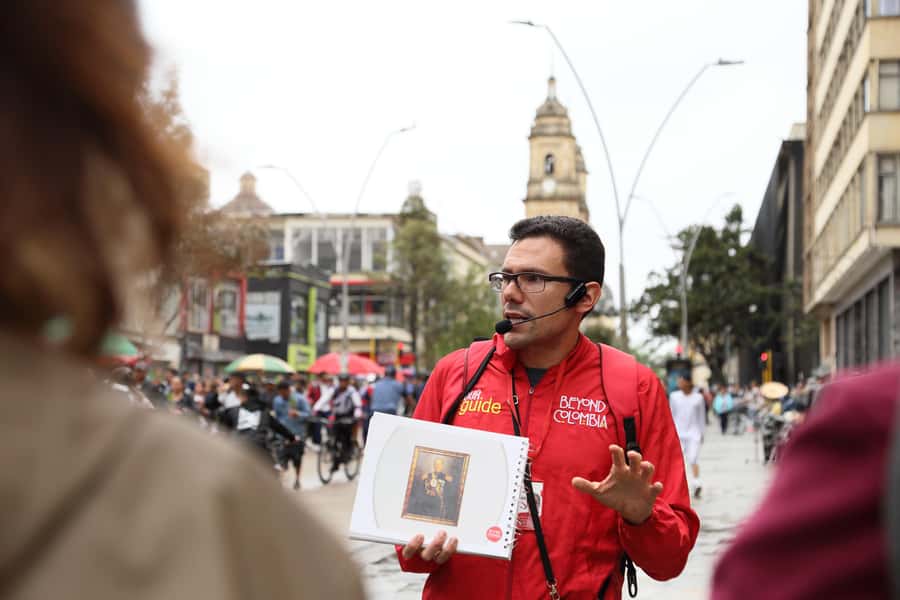
- Start at Museo del Oro with red umbrellas so you can find the group fast.
- Conflict origins to present day: independence, the violence era, guerrillas, and today’s situation.
- Bogotazo focus to show how one day in 1948 escalated a countrywide mood.
- FARC peace agreement explained in plain language, including why it mattered.
- Guerrillas vs paramilitaries covered as fighting for different reasons, not one simple story.
- Interactive guide style: guides such as Lorenzo, Hector, Santi, and Daniel are noted for answering questions and keeping things engaging.
Booking a few days in the city? These are the Bogotá trips our readers open first.


Why This Conflict-Era Walk in Bogotá Works
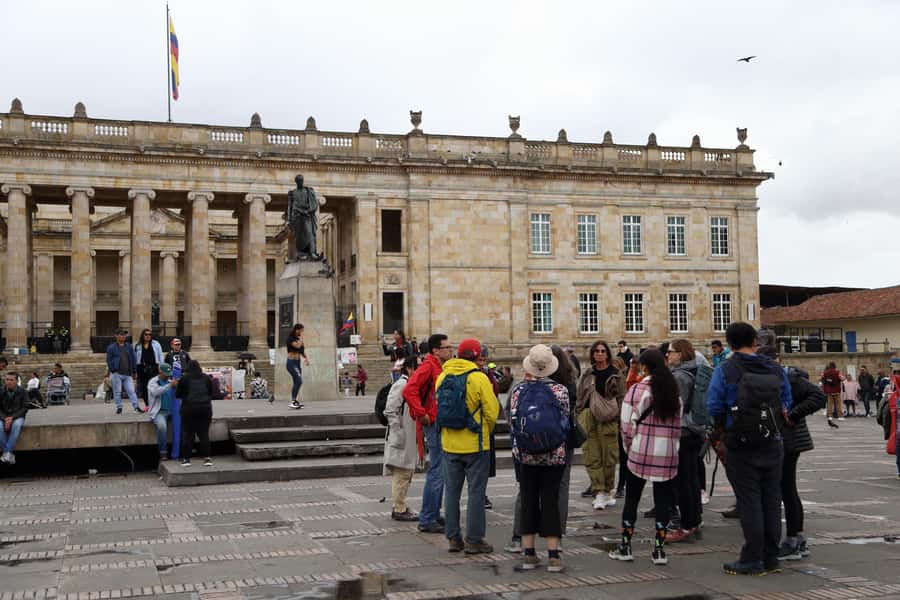
If you land in Bogotá and only see viewpoints and plazas, you miss the engine behind a lot of what shaped Colombia. This tour is designed to help you connect the dots: how political rivalries, state power, rebel movements, and the drug economy became intertwined over decades.
I like that you don’t need insider knowledge to start. You begin with the big background—independence and early national battles—and then move forward to the violence era, where ideas turned into organized armed struggle. That timeline matters, because modern Colombia is impossible to understand if you think of conflict as random or sudden.
It’s also practical that it’s a walking tour focused on the historic center. Places in the older part of Bogotá aren’t just scenery here; they act like anchors for the story. When the guide points out what happened and why it mattered, the city starts to make sense in your head.
Price and Value: $13 for a 150-Minute History Reality Check
At $13 per person for about 150 minutes, this is one of those prices that feels like it can’t possibly cover how much ground it covers. The value isn’t only the time—it’s the structure: a guided route through essential historic-center spots, with the conflict story woven in from start to finish.
You should compare this to the cost of a standard city walk plus paid entry tickets plus a history lesson. Here, the tour includes an English-speaking guide and sightseeing of key historic areas framed by conflict context, while tickets and entrances are not part of the plan. That means you’re not getting hit with surprise add-ons along the way.
And because it’s a shared tour, you get the benefit of other perspectives in the conversation. The guide is set up to keep things interactive, so your experience can improve quickly if you ask follow-up questions.
The only “cost” to budget for is physical comfort. The tour asks you to walk about 9 km, so good shoes are not optional. If you show up ready, this price-to-payout ratio is strong.
How the Tour Flows: From Independence to Today’s Armed Groups
The tour is built like a cause-and-effect story. The themes listed for the experience are wide—independence, Bogotá’s political violence, guerrilla creation, drug trafficking ties, the peace process, and the current political situation. The guide’s job is to connect them without turning it into a textbook.
Here’s the big arc you can expect as you move through the historic center:
Independence and early political conflict
The tour begins by setting context: Colombia’s independence process and the early fights over who should steer the country. This part matters because it explains the long-running habit of political rivalry becoming a fight over power, not just elections.
You’ll also get the sense of how early ideological divides set up later struggles between major parties. If you’ve ever wondered why politics in Colombia can feel intense, this is where the tour starts building the explanation.
- Bogota: Bicycle City Tour★ 4.9 · 2,156 reviews
- Zipaquirá: Salt Cathedral Group Tour with Pickup★ 4.8 · 1,606 reviews
- Bogotá: Guided La Candelaria Walking Tour★ 4.8 · 1,229 reviews
- Bogotá: Private City Tour, Monserrate, Emerald and Botero★ 4.9 · 798 reviews
Liberals vs Conservatives: supremacy battles
Next comes the struggle for supremacy between Liberals and Conservatives. This isn’t just “two party names.” The tour frames it as a pattern: political dominance attempts leading to instability, which then creates space for heavier tactics later on.
In a place like Bogotá’s historic center, these ideas feel less abstract. As the guide moves through central areas tied to the story of national power, you start to understand why control of institutions becomes a high-stakes issue.
The violence era mood shift, including the Bogotazo
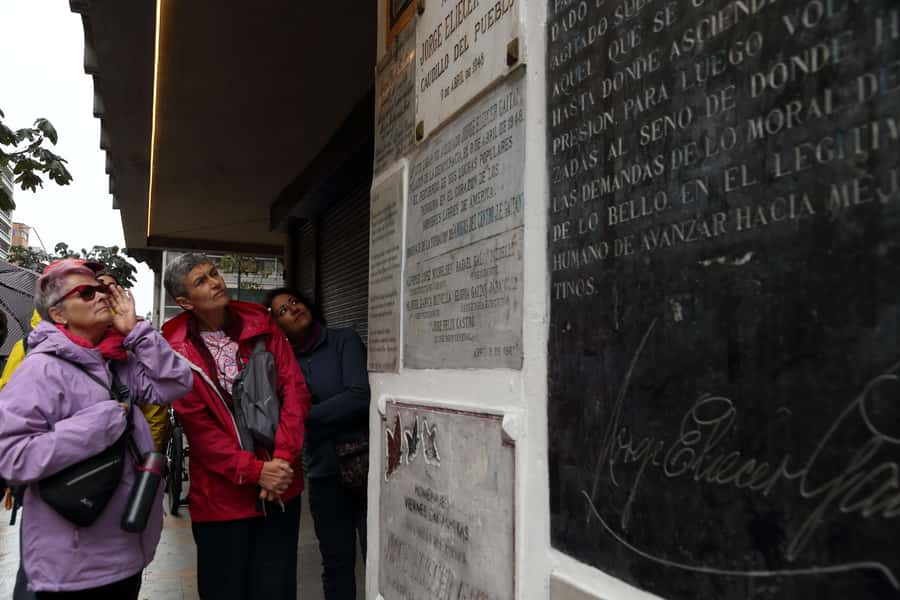
Then the tour reaches the part most people remember: Bogotazo and the period of violence that followed. The Bogotazo is presented as a controversial riot of 1948 that helped intensify the violence era.
This is the turning point where the “why” stops being theoretical. When the guide links the riot to the bigger escalation, you’ll get why later armed groups could form under conditions of instability and political fracture.
Military dictatorship and political tightening
From there, the story moves into the era of the military dictatorship. You’ll learn how shifts in power can change what the state can offer citizens—and how that can affect whether armed movements see violence as a path they can survive.
This section is helpful if you’ve heard “military” mentioned in Colombian history but never got the logic behind it. The guide’s aim is to show how governance choices can ripple outward.
Guerrillas are born: FARC, ELN, and M-19
Next comes the creation of guerrilla groups, including FARC, ELN, and M-19. Instead of treating them like random actors, the tour focuses on the reasons these groups formed and how those reasons tied back to earlier political conflict.
You’ll also hear about how conflict evolves: early motivations don’t stay fixed. As time passes, the armed landscape changes, and the guide connects those changes to the wider context.
Drug trafficking ties: when conflict and economics collide
One of the tour’s key strengths is addressing the ties to drug cartels and drug trafficking. The guide explains how the conflict environment helped shape the drug trade’s role and how illegal economies can fuel armed power.
This is important if you’ve only heard headlines. It turns the issue into a “system” you can understand: money, control, territory, and leverage. It’s not just about substances; it’s about what substance economies do to politics and security.
Peace agreement with FARC
Then you reach a hopeful—but complicated—chapter: the Peace Agreement signed with FARC. The tour frames the peace process as part of a larger attempt to change the cycle rather than a magic switch that ends violence overnight.
This section is valuable because it keeps expectations grounded. You’ll come away with a clearer sense of what peace tries to fix and why conflict dynamics can continue to evolve even after major agreements.
Current armed groups and why they’re fighting
Finally, the tour covers the current fighting reasons of guerrillas and paramilitary groups. The focus isn’t on sensational details; it’s on explaining motivations and how competing armed groups fit into the present political environment.
Depending on the guide’s pace, you might want to ask direct questions if you’re especially focused on today. The tour is designed to leave you with a more complete understanding of key actors and the fight against drug trafficking.
The Historic Center Stops: What You’re Really Seeing
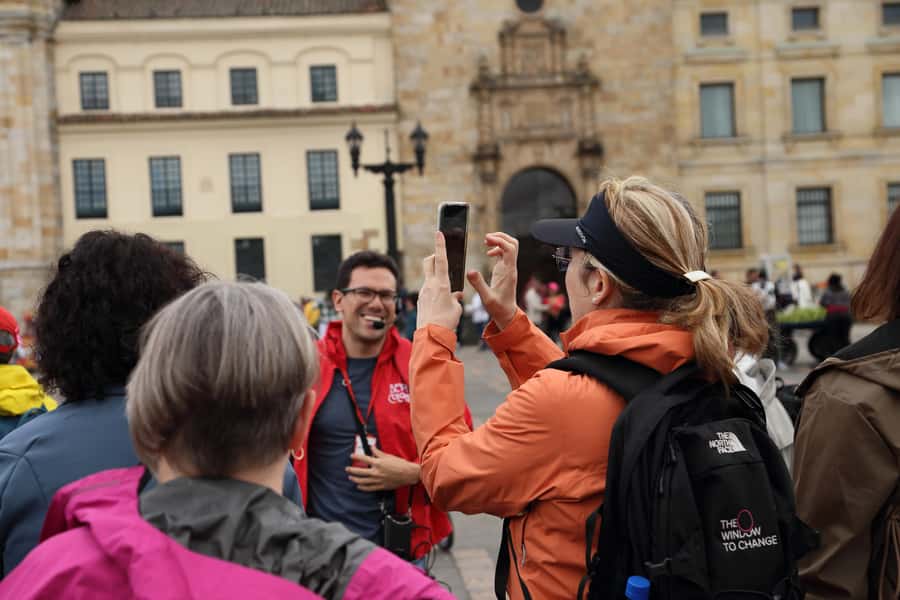
The tour doesn’t promise specific named attractions beyond the meeting point, but it does promise sightseeing of essential places in Bogotá’s historic center, each framed in conflict history. So what should you look for?
Think of it in layers:
- Symbols of national power: as the guide explains political events, you’ll connect them to the architecture and layout of older Bogotá.
- The city as a timeline: the historic center helps you visualize “this is where politics and public life played out.”
- Scarred memory in public space: even when you don’t see dramatic reminders, the guide’s storytelling makes you notice how locations hold meaning.
You’ll likely have stop-and-listen moments where the guide sets up the next chapter of history, then you move again. Since this is a walking tour, you’re learning while moving, which is often easier than trying to memorize dates in a museum.
The upside of this format is clarity. You’ll get a sense of how stories connect geographically and politically. The downside is that you’re not doing long museum-style deep reading at one site; you’re doing a high-level narrative with guided stops.
The Guides Matter: What Styles You Might Get
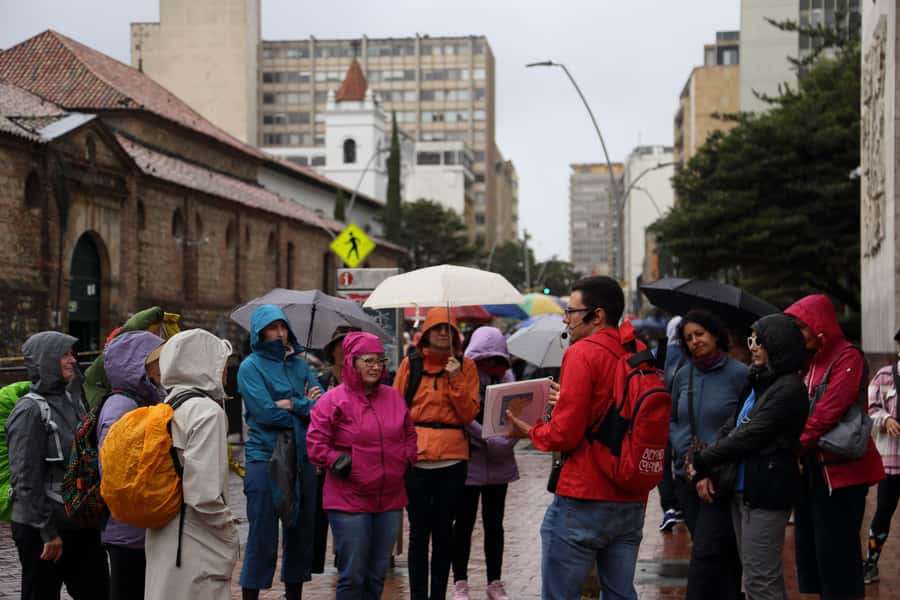
This tour is guided in English, and the guide is positioned as accurate and objective, promising not to take sides. In practice, what you’ll feel most is how the guide manages questions and pacing.
From the experiences shared, guides such as Lorenzo tend to involve the group with questions and keep things light with humor. Hector is noted for being friendly and answering questions directly. Santi and Daniel are highlighted for deep knowledge of a difficult subject.
So how do you use that? Go in ready to ask. If you’re unsure about something—peace process mechanics, guerrilla goals, or what “violence era” means in plain terms—ask early. A good guide will adjust their explanation as you go.
If your goal is a heavy focus on the present political context, you should be prepared to prompt follow-ups. The tour aims to cover it, but the emphasis can shift with the guide’s flow and what the group engages with.
Practical Stuff: Walking 9 km Without Turning It Into a Slog
This is the part you can control, so let’s make it easy.
What to bring
Bring comfortable shoes. The tour notes you’ll walk about 9 km, plus listening stops. Add a hat and sunscreen, since Bogotá’s sun can surprise you. Bring water (or your preferred hydration), because you may feel thirsty.
A camera helps, too, mainly so you can capture street-level context the guide refers to later. And if rain is in the forecast, have real rain protection.
Rain and the umbrella confusion
The instructions say umbrellas or capes are not allowed, but they also recommend a rainproof coat or umbrella. That’s a contradiction in the text, so I’d plan to bring a rainproof coat and, if you use an umbrella, be ready to follow whatever the guide asks on the day.
Not allowed
No smoking, and no alcohol or drugs. Simple rules, but they matter for staying safe and respectful in crowded historic areas.
Keep your belongings close
The tour explicitly warns that you’ll visit some crowded areas, so keep your bag secure and your phone close.
Finding the meeting point
Meet in front of the Museo del Oro with the tour’s red umbrellas. If you arrive a few minutes early, you’ll have a quick, low-stress start.
Logistics You Should Plan For (Without Making It Complicated)
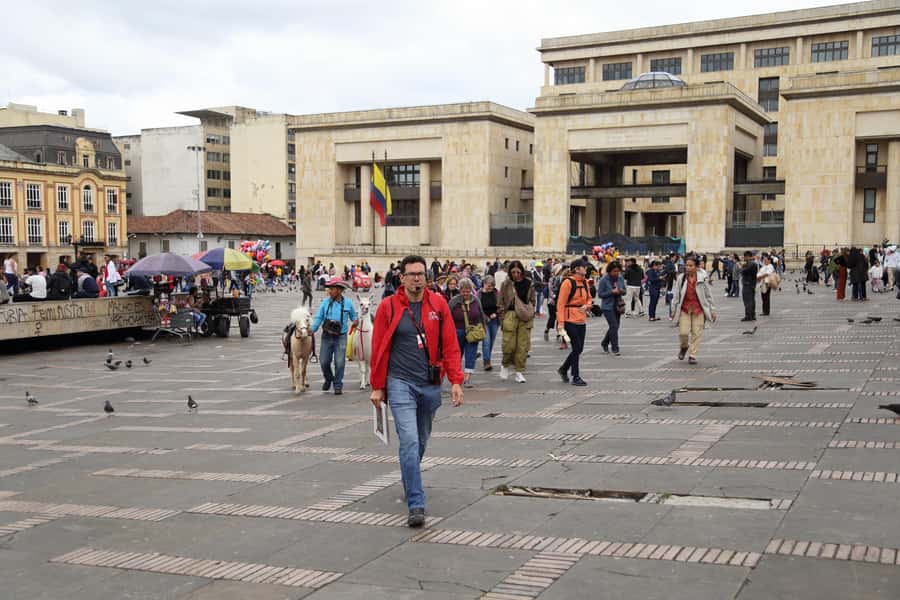
You’re looking at a shared tour in Bogotá, lasting about 150 minutes (around 3 hours). You’ll walk and take resting stops, but there’s no included hotel pickup or drop-off. That means you should plan your day around being able to reach the meeting area on foot or with a short ride.
Also, because no tickets or entrances are included, you won’t be pulled into extra charges for museum access mid-tour. That keeps budgeting cleaner.
There’s free cancellation up to 24 hours in advance for a full refund, and there’s a reserve-now, pay-later option. Use that if you’re still checking other Bogotá plans.
Accessibility Note: A Quick Reality Check Before You Book
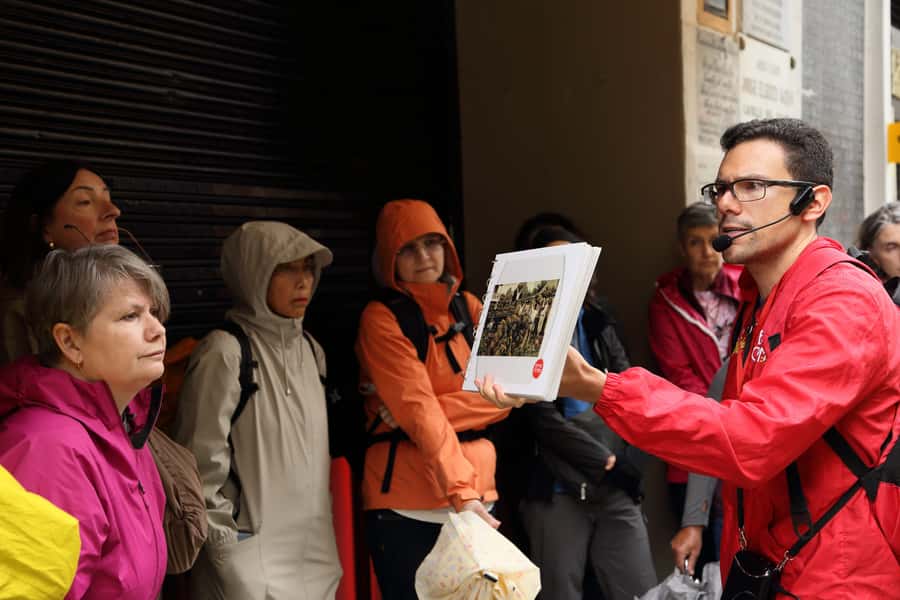
The activity information includes wheelchair accessibility, but the “Not suitable for” section lists people with mobility impairments and wheelchair users. That inconsistency means you should confirm directly with the provider before you rely on wheelchair access.
If mobility is a concern, don’t assume the walking distance will work just because the text mentions accessibility. Ask about the route and how resting stops are handled.
Who Should Book This Tour, and Who Might Want a Different Plan
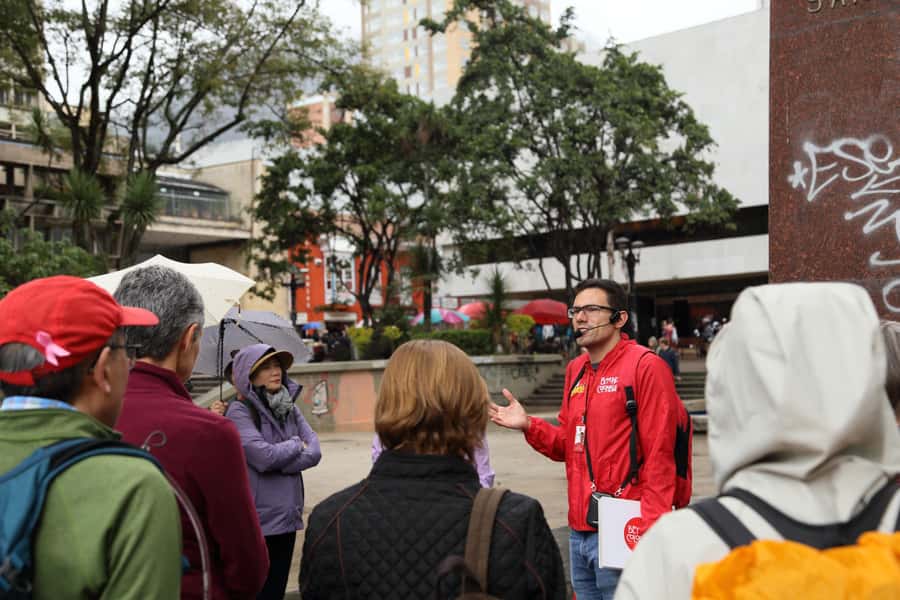
This tour is a good match if you want context, not just sightseeing. I’d point you toward it if you enjoy political history, want to understand how conflict shaped modern Bogotá, and prefer guided explanations tied to real places.
It also works well if you like discussion. The guide is set up to be interactive, and the best moments often happen when you ask questions and the guide connects them to the next chapter.
You might reconsider if:
- You struggle with walking long distances and want something lighter.
- You need a lot of quiet downtime with minimal crowds and minimal movement.
- You rely on mobility support and need a route that’s clearly suited to that, since the accessibility info conflicts.
Should You Book This Bogotá Conflict History Tour?
Yes—if you want to understand Colombia’s conflict story as a connected timeline, this tour is strong value. The $13 price makes it especially approachable, and the structure helps you go from independence-era context to the Bogotazo, guerrillas, peace talks, and today’s conflict landscape without getting lost.
Book it if you’re ready for a serious subject delivered in plain language, and if you can handle a walk of about 9 km. Bring water, wear shoes you trust, and plan to ask questions—your experience gets better fast when you engage.
FAQ
FAQ
How long is the tour?
It lasts about 150 minutes (approximately 3 hours).
How much does it cost?
The price is $13 per person.
Where do I meet the guide?
Meet right in front of the Museo del Oro with red umbrellas by Beyond Colombia.
What language is the tour in?
The tour is in English with an English-speaking tour guide.
What does the tour include?
It includes an English-speaking guide, sightseeing of essential places in Bogotá’s historic center framed in conflict history, and recommendations of materials you can check out later. You also get a wristband at the end that can unlock benefits and discounts with recommended partners.
Are tickets or entrances included?
No. Tickets and entrances are not included, and the tour says it won’t take you to places with sudden extra charges.
What should I bring?
Bring comfortable shoes, water, a hat, sunscreen, and a camera.
What’s not allowed during the tour?
No smoking, and no alcohol or drugs.
Is the tour good for kids?
It’s not suitable for children under 5 years.
Is it wheelchair accessible?
The information includes wheelchair accessibility, but it also states it is not suitable for wheelchair users and people with mobility impairments. You should confirm directly with the provider before booking.
More Tours in Bogota
- Bogota: Bicycle City Tour
★ 4.9 · 2,156 reviews - Zipaquirá: Salt Cathedral Group Tour with Pickup
★ 4.8 · 1,606 reviews - Bogotá: Guided La Candelaria Walking Tour
★ 4.8 · 1,229 reviews - Bogotá: Private City Tour, Monserrate, Emerald and Botero
★ 4.9 · 798 reviews - Bogotá´s Barrios: El Paraíso Favela Tour with Cable Car
★ 4.8 · 731 reviews - Bogota: Guatavita and Salt Cathedral Daily Group Tour
★ 4.7 · 615 reviews
More Tour Reviews in Bogota
- Bogota: Bicycle City Tour
★ 4.9 · 2,156 reviews - Zipaquirá: Salt Cathedral Group Tour with Pickup
★ 4.8 · 1,606 reviews - Bogotá: Guided La Candelaria Walking Tour
★ 4.8 · 1,229 reviews - Bogotá: Private City Tour, Monserrate, Emerald and Botero
★ 4.9 · 798 reviews - Bogotá´s Barrios: El Paraíso Favela Tour with Cable Car
★ 4.8 · 731 reviews - Bogota: Guatavita and Salt Cathedral Daily Group Tour
★ 4.7 · 615 reviews
Fresh off the review pile: more Bogotá tours to weigh up


Tours, compared.
 ★ 4.9Bicycle City TourFrom $192,156 reviews
 ★ 4.8Zipaquirá: Salt Cathedral Group Tour with PickupFrom $461,606 reviews
 ★ 4.8Guided La Candelaria Walking TourFrom $161,229 reviews
 ★ 4.9Private City Tour, Monserrate, Emerald and BoteroFrom $65798 reviews
 ★ 4.8Bogotá´s Barrios: El Paraíso Favela Tour with Cable CarFrom $78731 reviews
 ★ 4.7Guatavita and Salt Cathedral Daily Group TourFrom $91615 reviews
 ★ 4.9Bogotá City Tour with Monserrate, Gold and Botero MuseumsFrom $65584 reviews
 ★ 4.8Zipaquirá Salt Cathedral and Lake Guatavita Day TourFrom $61551 reviews