
Reviewed · ZIPAQUIRA SALT CATHEDRAL TOURS
Zipaquirá Salt Cathedral Private Tour + Walking Tour
Salt, stone, and faith underground. This private 6 to 7 hour tour from Bogotá takes you into the Catedral de Sal carved from an ancient salt mine, then walks you through key plazas and cultural corners in Zipaquirá. You get guided time where it matters, plus breathing room to wander and grab lunch on your own schedule.
I especially love how the salt mine experience is built like a story: you start in the Viacrucis corridor with 14 sculpted stations, then move toward the dome and the huge salt-cut cross. I also like the practical support baked into the day—audio guides in multiple languages, Wi‑Fi on board, and a snack + water so you’re not rationing your comfort halfway through.
One thing to consider: parts of the day are short (some plaza stops are brief), and the flow can feel more like a structured route with free time than a long, slow city hang. Also, if your guide speaks mostly in another language, you’ll want to rely on the audio devices so nothing gets lost.
In This Review
- Key highlights before you go
- Entering Zipaquirá’s Salt Cathedral: Why it’s so memorable
- The 2 hours underground: what you’ll actually do down there
- Bogotá to Zipaquirá: transport that shapes your day
- Plaza de la Independencia: independence symbolism in plain sight
- Plaza de los Comuneros: colonial architecture and a name with a story
- Casa del Nobel Cultural Center: where García Márquez learned to see stories
- Tres Esquinas station: French-neoclassical railway heritage in a small town
- Guide and audio support: how to make language work for you
- Price and value: does $185 per person make sense?
- Lunch in Zipaquirá: plan around the break you get
- Who should book this tour, and who should not
- Should you book this Zipaquirá Salt Cathedral Private Tour?
- FAQ
- How long is the Zipaquirá Salt Cathedral private tour?
- Is admission to the Salt Cathedral included?
- Do I get audio guides?
- Is lunch included in the price?
- What else is included besides the Salt Cathedral?
- Are the city stops guided?
- What if the weather is bad?
- Can most people participate, and are service animals allowed?
Key highlights before you go
- Underground Viacrucis with 14 salt-stone stations that turns a walk into a guided sequence
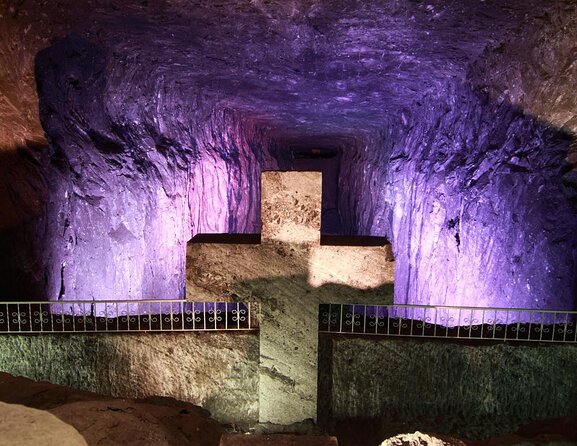
- The largest salt-cut cross in the world inside the cathedral’s main dome
- Short, focused plaza stops tied to independence-era symbols and early revolutionary lore
- García Márquez’s school site now the Casa del Nobel Cultural Center
- Tres Esquinas (1926) railway heritage with French-neoclassical style and national protection
- Tickets, audio guides, snack, and water handled for you so you spend less time planning
Heading underground at Zipaquirá? More salt cathedral day trips to compare

Entering Zipaquirá’s Salt Cathedral: Why it’s so memorable
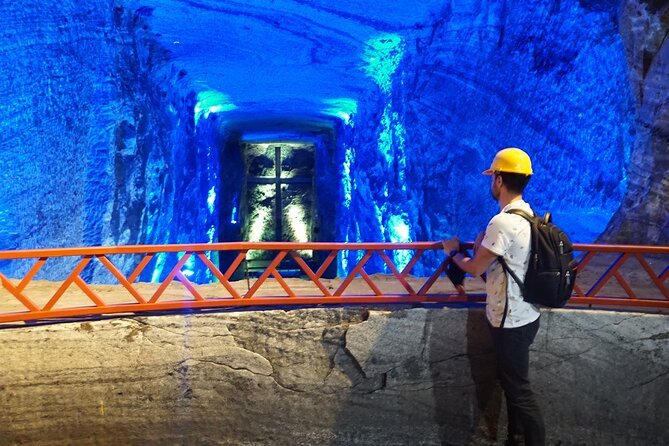
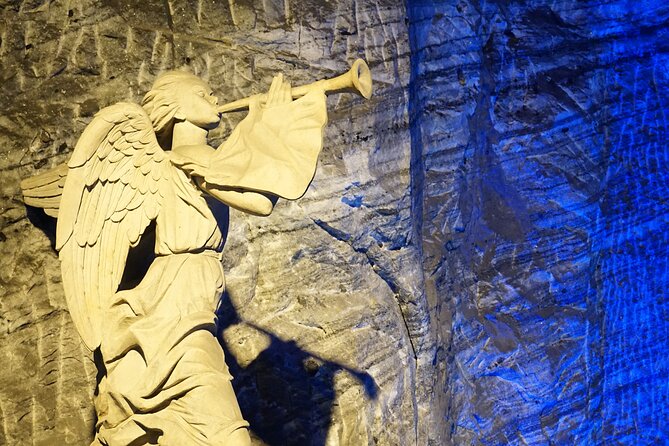
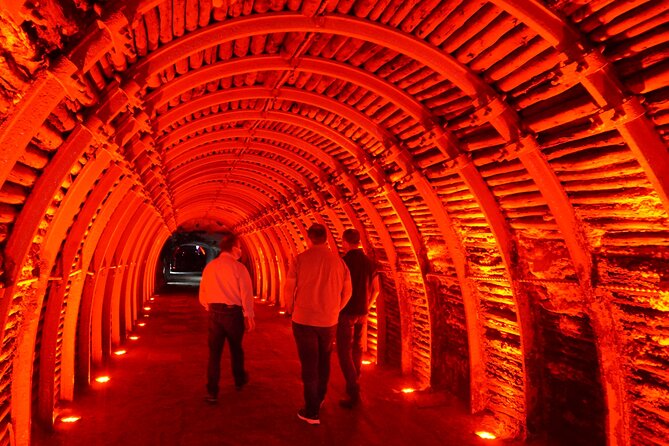
The Catedral de Sal is not a museum you look at from the outside. It’s a working-style underground space turned into architecture and faith, carved in a salt mine exploited since pre-Columbian times. That mix matters. You’re not just seeing a pretty sight—you’re in a place where salt shaped the landscape and the local story long before modern Colombia.
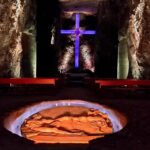
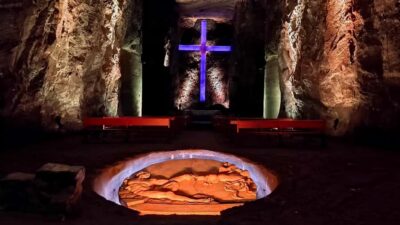
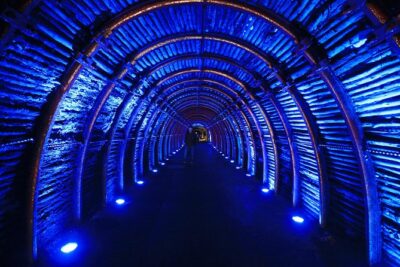
What makes the cathedral feel special is how it blends scale with symbolism. The Viacrucis corridor sets the tone right away, with 14 stations sculpted from salt rock to reflect Jesus’ path to crucifixion. Then the experience opens up toward the dome, where you can admire the largest salt-cut cross in the world. It’s the kind of structure that makes you pause, even if you’re not religious. The message comes through in the design.
And yes, it’s earned a reputation as the First Wonder of Colombia—not because of marketing, but because it’s rare to find this kind of underground, faith-based engineering anywhere else in the region.
The 2 hours underground: what you’ll actually do down there
You’ll spend around 2 hours at the Salt Cathedral, and the time is usually the core of the day. Expect a route that goes in sequence: corridor scenes first, then the broader interior spaces where you can take in the big visual icons.
Here’s what to pay attention to:
- In the Viacrucis corridor, the stations are sculpted into the environment, not placed like standalone exhibits. That makes it feel like you’re walking through a carved narrative.
- When you reach the dome and the cross, slow down. The cathedral’s biggest moments work best when you stop trying to rush the photos and instead give your eyes time to register the scale.
Practical tip: salt environments can feel cooler and drier than you expect. Wear layers and closed-toe shoes. If you get motion or walking fatigue easily, don’t treat the inside as a marathon—pace yourself.
Bathroom note: one visitor mentioned the staff were hesitant about bathroom access at the very end of the walk. To avoid stress, use the facilities earlier when you have the chance, especially if you’re sensitive to timing.
Bogotá to Zipaquirá: transport that shapes your day
This is a private tour, so you’re not sharing a bus with strangers or fighting for the front seat. The typical drive time is around 45 minutes from Bogotá, depending on traffic, which lines up with how many people describe the day as a half-day commitment (still close to 6 to 7 hours total door-to-door).
I like this setup because it reduces the “logistics tax.” You don’t have to figure out schedules, terminals, or where to stage your return. You’ll have a guide and driver working the route between stops, and you also get onboard Wi‑Fi, plus bottled water provided as part of the experience.
Two small timing realities to keep in mind:
- Traffic can change everything, so an early start is your friend.
- The schedule includes multiple quick city stops after the cathedral, so the day will feel full. Plan to travel light so your bag isn’t a burden during your walks.
Also, the tour includes medical insurance, which is a comfort benefit for a day trip that includes walking in a confined underground space.
Plaza de la Independencia: independence symbolism in plain sight
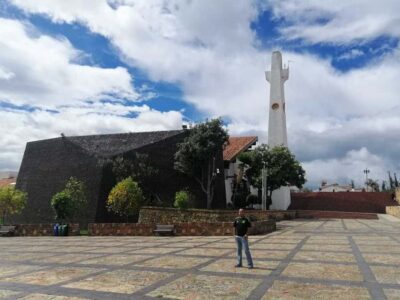
After the underground portion, you’ll head to Plaza de la Independencia for a short stop. This square used to be a market area, then it was re-inaugurated in 2010 as a tribute to independence and the legacy of Antonio Nariño.
The statue in the center is a key detail: Nariño is depicted holding a book connected to the human rights of the people. Around the square, the flags symbolize the countries that achieved freedom under Simon Bolívar’s leadership.
This stop is brief (about 10 minutes), so treat it like a visual “reset.” You’re shifting from salt-stone symbolism to national symbolism, and it helps to have those images fresh in your mind before the next walk.
If you’re the type who likes connecting art to politics, linger for one or two photos and one quiet minute reading what you can. It’s not long, but it’s not random either.
More private Bogotá experiences kept to just your group
- Bogotá: Private City Tour, Monserrate, Emerald and Botero★ 4.9 · 798 reviews
- Bogota: Salt Cathedral of Zipaquira Private daily Trip★ 4.8 · 262 reviews
- Private Salt Cathedral of Zipaquira Tour from Bogota with Lunch★ 5.0 · 88 reviews
- Salt Cathedral of Zipaquirá & Lake Guatavita: Private or Shared★ 5.0 · 88 reviews
Plaza de los Comuneros: colonial architecture and a name with a story
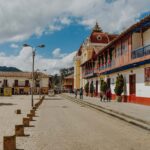
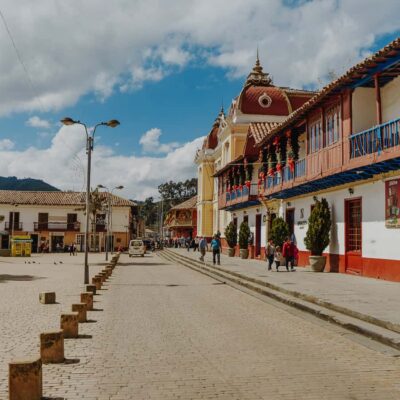
Next up is Plaza de los Comuneros, the heart of Zipaquirá and the setting for the first revolution of America, which is tied to where the city’s name comes from. The square is surrounded by major colonial-era buildings, including the Diocesan Cathedral, Government House, and Municipal Palace.
The streets around here are cobblestone, and the architecture is well preserved. Even with a short visit (again, about 10 minutes), the plaza works because it’s not only about history—it’s about atmosphere. This is where locals and visitors naturally gather, so you’ll feel the town’s rhythm as you move through.
If your day is moving quickly, don’t try to cover every building. Just capture the main square and one or two surrounding facades so you can connect it later with the stories your guide shares.
Casa del Nobel Cultural Center: where García Márquez learned to see stories
One of the most interesting non-salt stops is the site where Gabriel García Márquez studied as a boarder until his graduation in 1946. Today, that place functions as the Casa del Nobel Cultural Center, a space dedicated to art and the memory of the writer.
I like this stop because it gives you a different kind of Colombia story—less about monuments and more about the creative education behind one of the world’s best-known voices in literature. If you’ve read One Hundred Years of Solitude and Love in the Time of Cholera, you’ll recognize how the themes of place and memory fit with the town setting.
How much you can see inside may depend on the day, but the value here is the connection: you’re walking in the same general space linked to a Nobel Prize author’s formative years.
Tres Esquinas station: French-neoclassical railway heritage in a small town
Your final heritage stop is Tres Esquinas, a railway station built in 1926 during the presidency of General Pedro Nel Ospina. It was part of the Savannah Railway and played an important role in boosting regional commerce and industry.
What you’ll notice is the architecture. It has an elegant neoclassical French style—an unusual look you don’t always expect to find in smaller Colombian towns. The station is declared national architectural heritage, and it still carries the feel of the periods of Zipaquirá’s development between the 1920s and 1970s.
This is a great “ending frame” for the day. After salt and symbolism, you get a more grounded story: trade, rail lines, and how infrastructure shaped where people lived and how the town grew.
Guide and audio support: how to make language work for you
This tour offers audio guides in different languages, which is a big deal in a place where guides may speak mostly in Spanish. If you choose a professional local and bilingual guide, you’ll get more direct narration during the route, but the audio devices are there as a reliable layer.
I’ve seen people mention that guide style can be very animated in Spanish, and the audio helps you stay oriented even if your listening is limited. Another visitor specifically praised the Portuguese audio guide and how the written text added emotional weight to what you’re looking at inside the mine.
My practical advice:
- Bring earbuds/headphones you like. Audio quality matters when you’re underground and moving.
- Before you start inside, check which language you’ll use so you’re not fumbling during the first corridor sections.
- If your guide is speaking quickly, let the audio do the detailed work while you focus your eyes on the stations and forms.
When it works, you leave with both meaning and memory.
Price and value: does $185 per person make sense?
At $185 per person for a 6 to 7 hour private experience, you’re paying for more than a ticket. The value comes from the bundle: salt mine admission is handled for you, you get audio guides, and you also receive a snack of typical Colombian food plus bottled water. There’s onboard Wi‑Fi, medical insurance, and even a souvenir included.
What’s also valuable is the time saved. Getting in and out of Zipaquirá on your own can be a planning headache, and here you’re paying to remove that friction. In addition, there’s free time for lunch at a recommended restaurant, even though lunch itself is not included.
That said, there’s one caution: your expectations need to match the structure. If you want a long, deep city tour with lots of extended wandering and long museum-style explanations, this route may feel tighter because the schedule includes quick plaza stops after the main cathedral visit.
In plain terms: it’s a good price if you want the Salt Cathedral experience fully handled, plus a guided introduction to Zipaquirá’s key sights.
Lunch in Zipaquirá: plan around the break you get
Lunch isn’t included, but the tour includes free time for lunch at a recommended restaurant. That means you can order what you want and control your budget.
One smart move: treat the lunch window as a reset after the underground portion. You’ll likely want something warm and simple. If you’re hungry, don’t plan to spend the entire break chatting—have a quick look at the menu, order fast, and leave time to get back to the group on schedule.
If you prefer to eat earlier or later than the provided timing, you might need a bit more flexibility than this tour is designed for.
Who should book this tour, and who should not
This is a strong match if you:
- Want a one-day, private plan with major stops handled
- Care about faith-based architecture and symbolic art (the Viacrucis stations and cross make that connection)
- Appreciate audio support, especially if your Spanish isn’t fluent
- Like pairing an unforgettable underground site with a few town landmarks and cultural stops
It may not be the best fit if you:
- Want only independent exploration with zero structure
- Hate road time and would rather stay in Bogotá longer
- Need very long stays in each location (the plazas are short by design)
- Are looking for a strictly English-only narration throughout every moment (audio helps, but the live guide experience can vary)
Should you book this Zipaquirá Salt Cathedral Private Tour?
I’d book it if you want the Salt Cathedral done right, without spending hours organizing transport and tickets. The underground portion is the headline, and the rest of the route adds context: independence symbolism, colonial square energy, a key García Márquez connection, and the Tres Esquinas railway heritage stop.
Skip it if you’re the type who hates short stops and prefers long free wandering in one neighborhood. This day is built as a route, not a free-form day.
If you do book, set yourself up for success: wear layers for the mine, bring headphones for the audio guide, and plan to go with the flow rather than trying to turn every stop into a long personal detour.
FAQ
How long is the Zipaquirá Salt Cathedral private tour?
The tour runs about 6 to 7 hours total.
Is admission to the Salt Cathedral included?
Yes. Your ticket to the Salt Mine is paid for by the tour provider.
Do I get audio guides?
Yes. Audio guides are provided in different languages inside the Salt Cathedral.
Is lunch included in the price?
Lunch is not included, but you do get free time for lunch at a recommended restaurant.
What else is included besides the Salt Cathedral?
You get a typical Colombian snack, water, medical insurance, onboard Wi‑Fi, and a souvenir. The tour also includes the walking component through Zipaquirá sights.
Are the city stops guided?
There is a professional, local and bilingual guide if you choose, and you’ll cover the plazas and cultural/heritage stops as part of the guided experience plus walking.
What if the weather is bad?
This experience requires good weather. If it’s canceled due to poor weather, you’ll be offered a different date or a full refund.
Can most people participate, and are service animals allowed?
Most travelers can participate, and service animals are allowed.
More Tours in Bogota
- Bogota: Bicycle City Tour
★ 4.9 · 2,156 reviews - Zipaquirá: Salt Cathedral Group Tour with Pickup
★ 4.8 · 1,606 reviews - Bogotá: Guided La Candelaria Walking Tour
★ 4.8 · 1,229 reviews - Bogotá: Private City Tour, Monserrate, Emerald and Botero
★ 4.9 · 798 reviews - Bogotá´s Barrios: El Paraíso Favela Tour with Cable Car
★ 4.8 · 731 reviews - Bogota: Guatavita and Salt Cathedral Daily Group Tour
★ 4.7 · 615 reviews
More Tour Reviews in Bogota
- Bogota: Bicycle City Tour
★ 4.9 · 2,156 reviews - Zipaquirá: Salt Cathedral Group Tour with Pickup
★ 4.8 · 1,606 reviews - Bogotá: Guided La Candelaria Walking Tour
★ 4.8 · 1,229 reviews - Bogotá: Private City Tour, Monserrate, Emerald and Botero
★ 4.9 · 798 reviews - Bogotá´s Barrios: El Paraíso Favela Tour with Cable Car
★ 4.8 · 731 reviews - Bogota: Guatavita and Salt Cathedral Daily Group Tour
★ 4.7 · 615 reviews
More Zipaquirá Salt Cathedral Day Trips
- Zipaquirá: Salt Cathedral Group Tour with Pickup
★ 4.8 · 1,606 reviews - Bogota: Guatavita and Salt Cathedral Daily Group Tour
★ 4.7 · 615 reviews - Bogota: Zipaquirá Salt Cathedral and Lake Guatavita Day Tour
★ 4.8 · 551 reviews - Bogota: Salt Cathedral of Zipaquira Private daily Trip
★ 4.8 · 262 reviews - Bogota:Zipaquirá Salt Cathedral & Guatavita Trip with Pickup
★ 4.8 · 183 reviews - New & Cheapest ZIPAQUIRA & GUATAVITA LAKE Visit 5 Sites/PICKUP
★ 5.0 · 153 reviews
Fresh off the review pile: more Bogotá tours to weigh up
Zipaquira Salt Cathedral Tours, compared.
 ★ 4.8Zipaquirá: Salt Cathedral Group Tour with PickupFrom $461,606 reviews
 ★ 4.7Guatavita and Salt Cathedral Daily Group TourFrom $91615 reviews
 ★ 4.8Zipaquirá Salt Cathedral and Lake Guatavita Day TourFrom $61551 reviews
 ★ 4.8Salt Cathedral of Zipaquira Private daily TripFrom $75262 reviews
 ★ 4.8Zipaquirá Salt Cathedral & Guatavita Trip with PickupFrom $66183 reviews
 ★ 5.0New & Cheapest ZIPAQUIRA & GUATAVITA LAKE Visit 5 Sites/PICKUPFrom $53153 reviews
 ★ 5.0Shared Tour Zipaquirá Salt Cathedral and Guatavita LagoonFrom $74139 reviews
 ★ 5.0Salt Cathedral of Zipaquirá & Lake Guatavita: Private or SharedFrom $13988 reviews
Browse the lists this tour appears in