
Reviewed · LA CANDELARIA OLD TOWN WALKS
Bogota Walking Tour Teusaquillo a different part of the city
Teusaquillo tells Bogotá’s real story on foot. I like that this tour mixes street art stops with local food-and-drink tastes in a part of the city many visitors skip. You’ll also walk away knowing how the neighborhood fits into Colombia’s bigger story, from independence to the 2016 peace agreement. One thing to consider: it’s a steady walk with lots of short stops, so wear comfortable shoes and be ready to move every few minutes.
If you want to see Bogotá beyond the headline sights, this is a smart way to do it. You’ll spend about three hours in Teusaquillo, bouncing between parks, galleries, cultural houses, cafés, pubs, and independent projects while your guide connects the buildings and street scenes to modern political history. The tour runs with a live guide in English, Portuguese, and Spanish, and it’s set up as a private group, which helps the pace feel personal.
In This Review
- Key things you’ll notice on this Teusaquillo walk
- Why Teusaquillo beats the usual Bogotá route
- Meeting at Museo Nacional and finding your guide fast
- Bavaria Central Park and the architecture you’ll learn to read
- Jorge Eliécer Gaitán Museum and the street history connection
- Casa de Betty La Fea, public parks, and the everyday side of Teusaquillo
- Art galleries, cultural houses, and the coffee-graffiti moment
- Prosa del mundo Librería and how shopping can be cultural
- El Parche Ropa y Accesorios and what to buy without overthinking it
- ParkWay photo stop and the final stretch
- Lubianka Pub and the coffee-or-beer payoff
- Price: is $19 worth it in Bogotá terms?
- Who should book this Teusaquillo walk
- A quick note on guides and group vibe
- Should you book this tour of Teusaquillo?
- FAQ
- Where do I meet for the tour?
- How long is the Bogotá Teusaquillo walking tour?
- What is the price?
- What does the tour include for food and drink?
- What kind of stops will I make?
- Are entrance fees included for galleries and cultural houses?
- What languages are available?
- Is this tour private, and is it wheelchair accessible?
- Is free cancellation available?
Key things you’ll notice on this Teusaquillo walk
- Independence-to-2016 storytelling you can see on the street, not just in a lecture
- Coffee or craft beer tasting plus a chocolate tasting during the route
- Gallery and cultural-house entrances built into the tour flow
- A graffiti stop with a workshop window where street art becomes interactive
- Local crafts and clothing shopping at an arts-and-accessories market stop
- Bonus local color if you’re lucky, since a dog named Appa may join one departure
Still in the old town? A few more La Candelaria walks locals send visitors on

Why Teusaquillo beats the usual Bogotá route
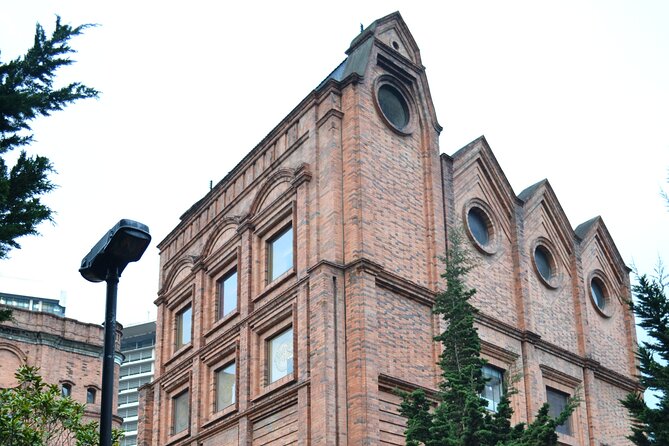
Teusaquillo sits in a sweet spot for first-time visitors who want more than a checklist. This tour focuses on a district with layers: everyday cafés and pubs, small galleries, and street art that you’d normally walk right past without context. I like that it gives you a reason to pay attention to details at street level—doors, facades, public parks, and the places where culture actually happens.
There’s also a practical side. Many Bogotá days get anchored around a few big museums and viewpoints. Here, you get a smoother, neighborhood-style experience: walk, pause, look closely, then learn how the place fits into Colombia’s modern political formation. It’s designed for people who want to understand the city’s “why,” not just its “what.”
Meeting at Museo Nacional and finding your guide fast
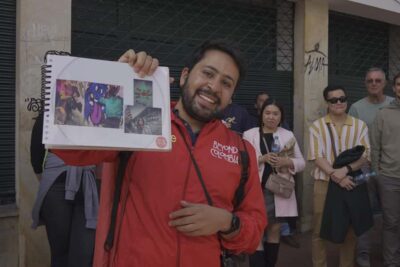
You meet at the entrance area of Museo Nacional de Colombia. Look for your guide wearing a red hat and carrying a red umbrella with the tour logo. That’s a small detail, but it matters in Bogotá where street layouts can be confusing if you arrive a few minutes late.
The tour is planned for a total duration of about 3 hours, with frequent short stops. That means arriving on time helps you get the full rhythm: guided moments, quick photos, then the next block of context. It’s also offered with a live guide in English, Portuguese, and Spanish, so you can match your comfort level.
One more helpful note: this is marked as wheelchair accessible, which is good to know if you’re navigating cobblestones or uneven sidewalks.
Bavaria Central Park and the architecture you’ll learn to read
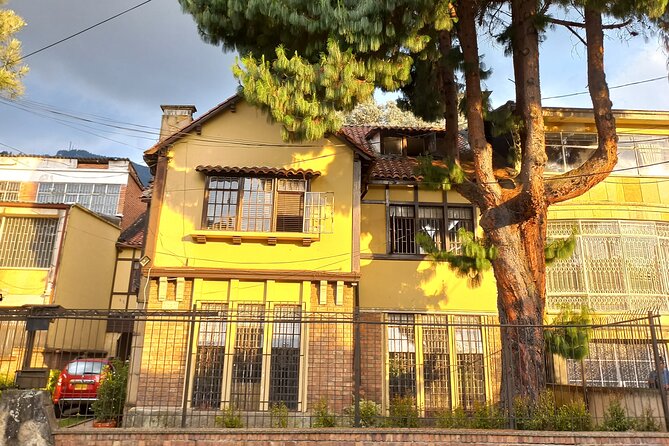
The walk starts with a first stop at Bavaria Central Park. Expect around 10 minutes of guided orientation, plus another short stretch for sightseeing and photos. This is where you start learning how the neighborhood is organized and what to watch for as you move.
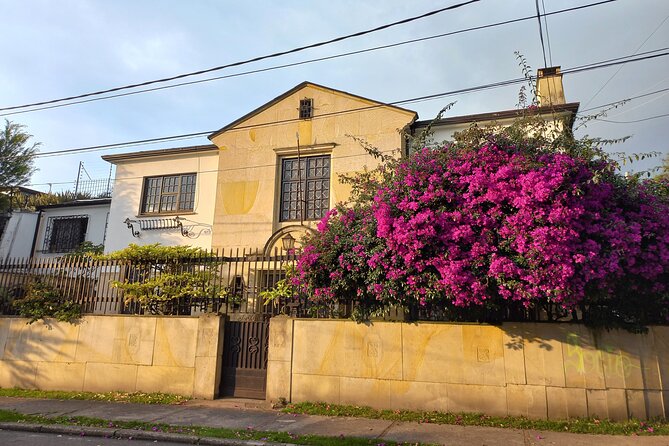
From there you keep moving into the built environment, with short guided looks at places like Casa Celo and the Nunciatura Apostólica. These aren’t long museum-style sessions. Instead, the guide uses the street scene itself as the lesson: what’s on the exterior, what kind of building it is, and how those physical choices connect to Colombia’s political and cultural shifts.
If you like walking tours, this part feels efficient. You’re not stuck listening for an hour in one location. You’re building a mental map as you go.
Jorge Eliécer Gaitán Museum and the street history connection
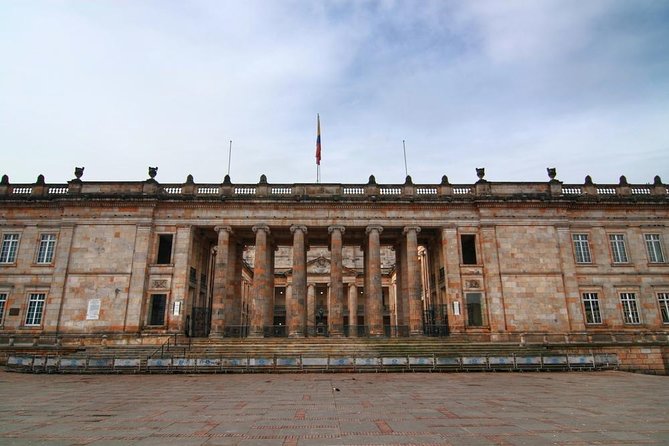
Next up is the Jorge Eliecer Gaitan Museum area. You’ll get a guided segment (about 10 minutes in the flow) plus a pass-by moment to keep the walk moving. The idea is to connect people and events to the built space around them.
Here’s the value for you: if Colombia’s modern history feels abstract from books, the streets help it land. You start to notice that political life isn’t only about presidents and dates. It’s also about institutions, public spaces, and how communities were shaped over time.
After that, you’ll pass or visit a few more recognizable cultural stops, keeping the theme consistent: the neighborhood as a living record. The tour’s framing runs from independence (1819) through major political changes and arrives at the peace agreement in 2016, using buildings as your visual anchor.
More Bogotá city tours we point first-timers toward
- Bogotá: Private City Tour, Monserrate, Emerald and Botero★ 4.9 · 798 reviews
- Bogotá City Tour with Monserrate, Gold and Botero Museums★ 4.9 · 584 reviews
- 3-in-1 Panoramic city tour Bogotá-beyond the traditional★ 4.4 · 248 reviews
- Bogotá: City Tour, Monserrate, Gold Museum, Plaza de Bolivar★ 4.7 · 168 reviews
Casa de Betty La Fea, public parks, and the everyday side of Teusaquillo
Not every stop is a formal institution. You’ll also have time to visit places that feel more like neighborhood culture than tourist attractions.
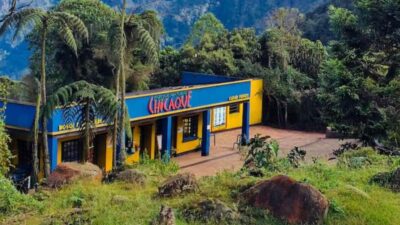
A good example is the Casa de Betty La Fea stop. It’s short—about 10 minutes in the route—but it gives you a pop of modern pop culture on the walk. That kind of break keeps the tour human. It also helps if you’ve been reading a lot of history on your trip and want something lighter before the next learning block.
You’ll also stop at público Park for photos and a quick visit. These park moments matter more than people think. In Bogotá, parks are often where the neighborhood breathes. They give you a chance to look at street life without constantly walking uphill or through crowds.
Art galleries, cultural houses, and the coffee-graffiti moment
A major reason to choose this tour is the blend of formal culture and street-level creativity. You’ll enter galleries and cultural houses as part of the experience, not just pass by them. The included access is what turns the walk from scenery into something you can actually experience.
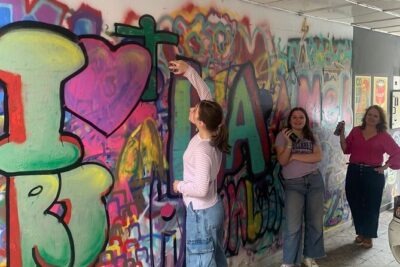
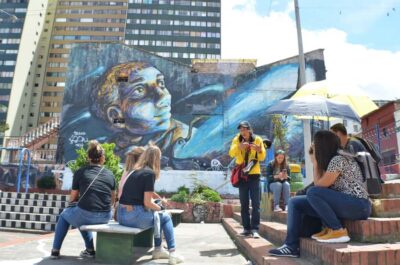
Then comes Visaje Graffiti, including a photo stop, a guided segment, and a workshop window (about 20 minutes). This is one of the most hands-on parts of the route. Even if you’re not an art person, it’s a good moment to slow down and understand how street art works in context—what it communicates, and why it matters to locals.
Expect it to feel more active than a typical “look at this wall” stop. And if you’re traveling with someone who likes creative experiences, this is where you’ll both get something out of it.
Prosa del mundo Librería and how shopping can be cultural
Next you’ll reach Prosa del mundo Librería for a visit, guided look, some time to shop, and a pass-by moment. It’s not just a store stop. In a tour like this, a bookshop becomes a lens: you see what kind of independent projects exist in the district, and you pick up a sense of what people choose to read and talk about locally.
Short pauses like this are also useful for you if you’re traveling on a schedule. You get a focused break from walking without losing the tour’s theme.
El Parche Ropa y Accesorios and what to buy without overthinking it
You’ll also visit El Parche Ropa y Accesorios, described as an arts-and-accessories market stop. You’ll have time for shopping and a quick look around—again, about 10 minutes within the overall route.
This is where I suggest you shop smart, not long. Decide what you’re looking for before you arrive (a postcard, a small craft, a scarf, a local-brand item). Then keep it simple. Market stops can easily turn into a time sink if you wander without a plan.
Also, since the tour includes a sticker, you can think of that as a small souvenir meant to mark the experience. If you don’t want to buy anything, you won’t feel like you missed a “must do.”
ParkWay photo stop and the final stretch
You’ll make a ParkWay stop for photos, plus guided sightseeing, a bit of walking, and a final wrap at ParkWay. This is a good ending point because it leaves you with an easy place to continue your day—grab a drink nearby, head for dinner, or connect to the rest of your Bogotá plans.
Because the stops earlier were frequent and short, that final stretch also helps you summarize what you learned. By the time you reach ParkWay, you’ll have seen enough street-level cues to start connecting history to everyday life without feeling overloaded.
Lubianka Pub and the coffee-or-beer payoff
This tour includes a tasting, and it doesn’t treat food and drink like an afterthought. You’ll have a coffee or craft beer tasting, plus a chocolate tasting, and the route includes a longer scheduled moment at Lubianka Pub (about 30 minutes) where the focus is beer.
Even if you don’t drink alcohol, it’s still a strong value play because the tour builds this into the planned time. You’re not searching for a café after your walking day. You’re given a specific pause, with the tasting included.
One practical tip: Bogotá days can be cool, and a warm drink helps you reset. If the option available to you is coffee, you’ll probably appreciate the break more than you expect.
Also, the tour includes moments for cafés and pubs along the way, and the food theme includes local favorites like arepas, coffee, chicha, and beer. You may not taste every item on the list, but you’ll be oriented toward what locals actually eat and drink in the area.
Price: is $19 worth it in Bogotá terms?
At $19 per person for about 3 hours, this is priced like a practical neighborhood experience, not a premium museum marathon. Here’s why it holds value:
- You get included access to galleries and cultural houses, which can cost extra on your own.
- Tastings are built in: coffee or craft beer and chocolate.
- You get a planned creative segment with a graffiti workshop component.
- You also get a small souvenir (sticker), plus guided context that turns a walk into a learning experience.
Could you do parts of it solo? Sure. But you’d likely spend extra time figuring out where to go, and you’d miss the connection between buildings, parks, and Colombia’s political evolution—from 1819 through the 2016 peace agreement.
If you’re spending a day in Bogotá and want maximum payoff per hour, this tour is a strong candidate.
Who should book this Teusaquillo walk
This is ideal if you:
- want history with texture, not just dates
- like street art and independent cultural spaces
- prefer short guided stops over long sit-down museum time
- enjoy food-and-drink moments that are actually scheduled
- want a calmer pace thanks to a private group format
If you hate walking, or if you need nonstop sitting breaks, the frequent short stops may feel like too much movement. But if you’re comfortable with a city walk, it’s a great match.
A quick note on guides and group vibe
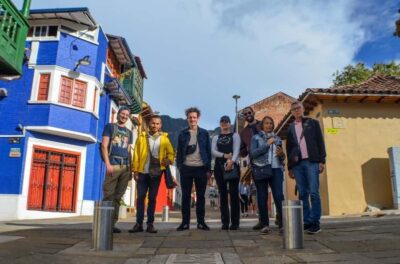
The tour has live guides in multiple languages. In one reported case, the guide was Luis Bonilla, and the group also had company from a friendly dog named Appa. That kind of local charm is exactly what makes neighborhood tours feel personal.
Even if your guide differs, the format stays consistent: guided looks, quick photos, then the next block of context.
Should you book this tour of Teusaquillo?
If you’re deciding between another “big sights” day and something that helps you understand Bogotá, I’d lean yes. For $19 and 3 hours, you get a rare combination: neighborhood culture, art you can interact with, and history tied to what you can actually see on the street.
Book it if you’re the type of traveler who likes wandering with a purpose. Skip it only if you want a mostly indoor, low-walking experience. Otherwise, this tour gives you a side of Bogotá that feels closer to real life—parks, galleries, cafés, street art, and the political story hiding in plain sight.
FAQ
Where do I meet for the tour?
You meet in front of the entrance of Museo Nacional de Colombia. Your guide will have a red hat and a red umbrella with the tour logo.
How long is the Bogotá Teusaquillo walking tour?
The duration is 3 hours.
What is the price?
The price is $19 per person.
What does the tour include for food and drink?
It includes a coffee or craft beer tasting and a chocolate tasting.
What kind of stops will I make?
You’ll make stops at parks, museums and cultural houses, galleries, and areas for street art and local shopping.
Are entrance fees included for galleries and cultural houses?
Yes. Entrance to the galleries and cultural houses is included.
What languages are available?
The live tour guide is available in English, Portuguese, and Spanish.
Is this tour private, and is it wheelchair accessible?
Yes. It’s listed as a private group, and it is marked wheelchair accessible.
Is free cancellation available?
Yes. You can cancel up to 24 hours in advance for a full refund.
More Tours in Bogota
- Bogota: Bicycle City Tour
★ 4.9 · 2,156 reviews - Zipaquirá: Salt Cathedral Group Tour with Pickup
★ 4.8 · 1,606 reviews - Bogotá: Guided La Candelaria Walking Tour
★ 4.8 · 1,229 reviews - Bogotá: Private City Tour, Monserrate, Emerald and Botero
★ 4.9 · 798 reviews - Bogotá´s Barrios: El Paraíso Favela Tour with Cable Car
★ 4.8 · 731 reviews - Bogota: Guatavita and Salt Cathedral Daily Group Tour
★ 4.7 · 615 reviews
More Tour Reviews in Bogota
- Bogota: Bicycle City Tour
★ 4.9 · 2,156 reviews - Zipaquirá: Salt Cathedral Group Tour with Pickup
★ 4.8 · 1,606 reviews - Bogotá: Guided La Candelaria Walking Tour
★ 4.8 · 1,229 reviews - Bogotá: Private City Tour, Monserrate, Emerald and Botero
★ 4.9 · 798 reviews - Bogotá´s Barrios: El Paraíso Favela Tour with Cable Car
★ 4.8 · 731 reviews - Bogota: Guatavita and Salt Cathedral Daily Group Tour
★ 4.7 · 615 reviews
More La Candelaria Old Town Walks
- Bogotá: Guided La Candelaria Walking Tour
★ 4.8 · 1,229 reviews - Bogotá: La Candelaria Graffiti & Urban Art Guided Tour
★ 4.7 · 250 reviews - Shared Tour of Bogota’s Historic Downtown (La Candelaria)
★ 4.7 · 100 reviews - Graffiti Tour in La Candelaria Bogotá with Transportation
★ 5.0 · 68 reviews - VIP Bogota City Tour: Farmers Market, Monserrate, Candelaria, 9hr
★ 5.0 · 66 reviews - Food Tour in La Candelaria Bogotá
★ 5.0 · 63 reviews
Fresh off the review pile: more Bogotá tours to weigh up

La Candelaria Old Town Walks, compared.
 ★ 4.8Guided La Candelaria Walking TourFrom $161,229 reviews
 ★ 4.7La Candelaria Graffiti & Urban Art Guided TourFrom $16250 reviews
 ★ 4.7Shared Tour of Bogota’s Historic Downtown (La Candelaria)From $13100 reviews
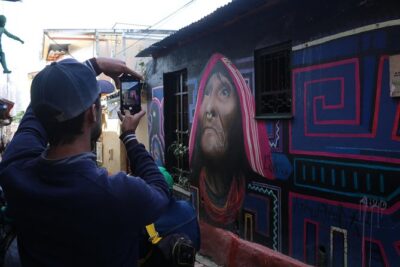 ★ 5.0Graffiti Tour in La Candelaria Bogotá with TransportationFrom $4368 reviews
 ★ 5.0VIP Bogota City Tour: Farmers Market, Monserrate, Candelaria, 9hrFrom $4966 reviews
 ★ 5.0Food Tour in La Candelaria BogotáFrom $6363 reviews
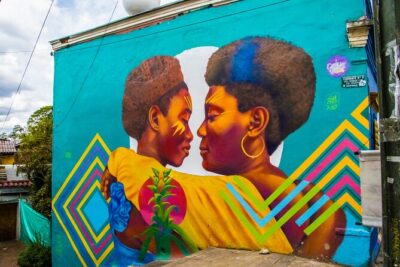 ★ 5.0La Candelaria Walking Private Tour (3 Hrs.)From $8951 reviews
 ★ 5.0VIP Layover Bogota City Tour: Monserrate, Candelaria, Coffee, 6hrFrom $4445 reviews
Browse the lists this tour appears in