
Reviewed · LA CANDELARIA OLD TOWN WALKS
Shared Tour of Bogota’s Historic Downtown (La Candelaria)
Bolívar Square to street art, in one walk. I love how this tour turns La Candelaria into a story you can actually follow, with guides like Lorenzo making big events feel clear and human instead of textbook. I also like the way the route mixes major landmarks with smaller details—so you’re not just looking, you’re understanding.
My second favorite part is the food-and-culture stop, especially chicha tasting when it’s available, plus the street-level creativity in places like El Embudo alleyway. The only real drawback to plan for is physical effort: you’ll cover about 7 km and some stretches can feel steep, especially since Bogotá sits high (one guest noted the uphill grind at around 8600 ft).
In This Review
- Key moments worth your time
- Meeting at Museo del Oro: how the walk sets the tone
- Bolívar Square and the Spanish-era pivot
- El Bogotazo and the Justice Palace: hard history, told with care
- From El Dorado to real streets: myths that explain the mindset
- Concordia Market and chicha tasting: the story in your cup
- El Embudo alleyway graffitis: street art as resistance
- Chorro de Quevedo and the Old Town foundations
- Botero’s Museum and the Cultural Square: art tied to public space
- The False Door: a small detail with big meaning
- Price and value: what $13 really buys you
- Practical tips for the uphill 3-hour loop
- Who should book this walking tour?
- Should you book Beyond Colombia’s Historic Downtown walk?
- FAQ
- How long is the Bogota historic downtown tour?
- How much does the tour cost?
- Where do I meet the tour guide?
- What’s included in the price?
- Is chicha tasting guaranteed?
- Is there transportation included?
- Do I need tickets or museum entrances?
- Is the tour wheelchair accessible?
- What should I bring?
Key moments worth your time
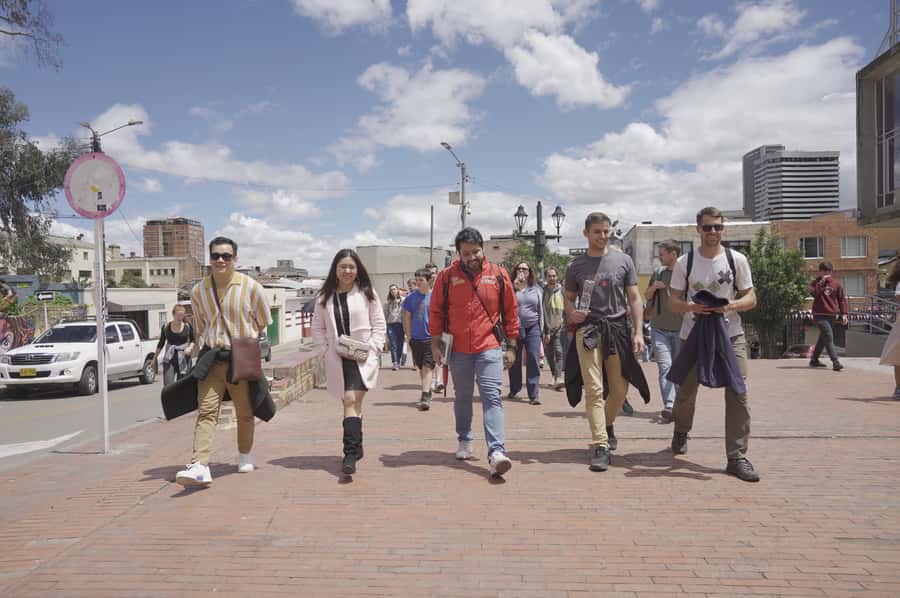
- 7 km, 150 minutes: a serious walking loop with built-in listening stops
- Bolívar Square context: who founded the country’s capital and why the buildings matter
- El Bogotazo explained (1948): a modern tragedy tied to the name Jorge E. Gaitán
- Chicha tasting in Concordia Market: heritage you can taste, not just read about
- Iconic Candelaria graffitis: street art as history, technique, and resistance
Still in the old town? A few more La Candelaria walks locals send visitors on


Meeting at Museo del Oro: how the walk sets the tone
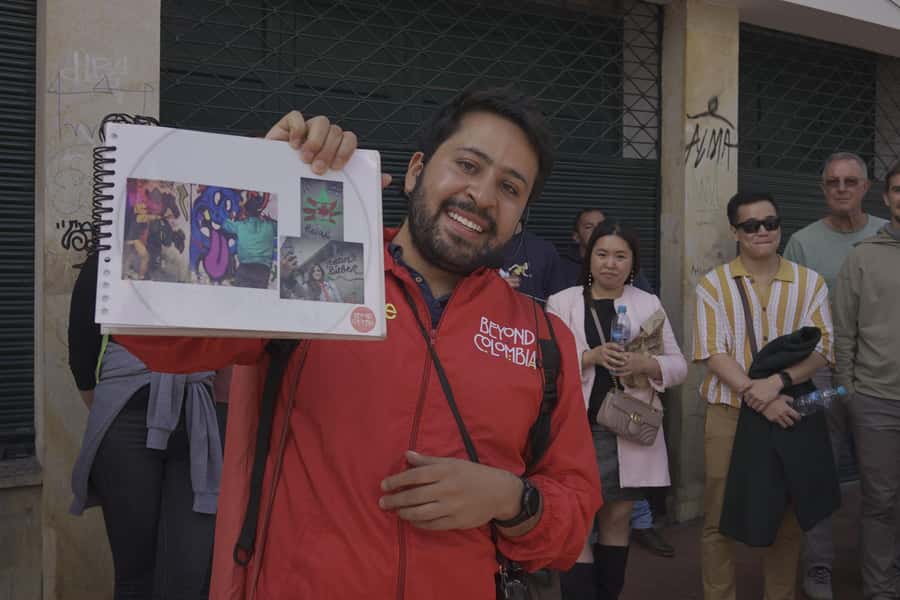
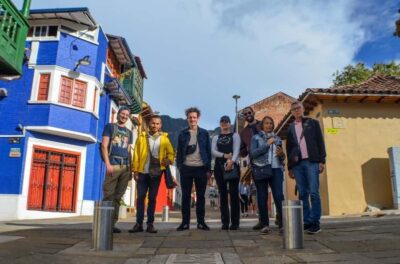
The tour starts at a very easy-to-find landmark: right in front of the Museo del Oro, with the Beyond Colombia team holding red umbrellas. That matters because you’re about to step into a neighborhood where the streets can feel like a maze, and you’ll want your bearings fast.
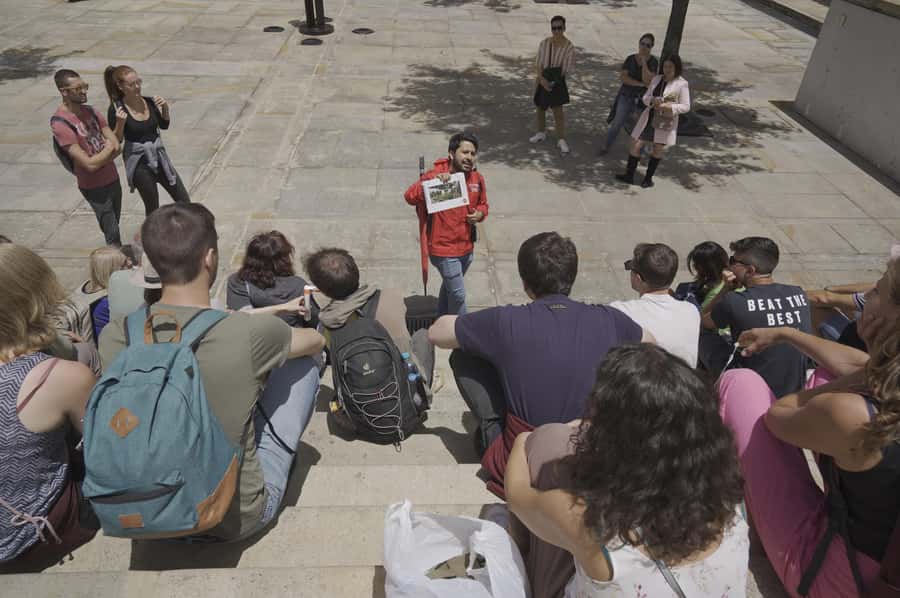
From the first minutes, you’ll get the core framing: Bogotá as a capital, Bogotá as a stage for change, and Bogotá as a city that keeps rewriting itself after major shocks. The guides are there to connect politics, architecture, and daily life—so when you hit a plaza or alleyway, it won’t feel random. You’ll understand what you’re seeing and why people still argue about it.
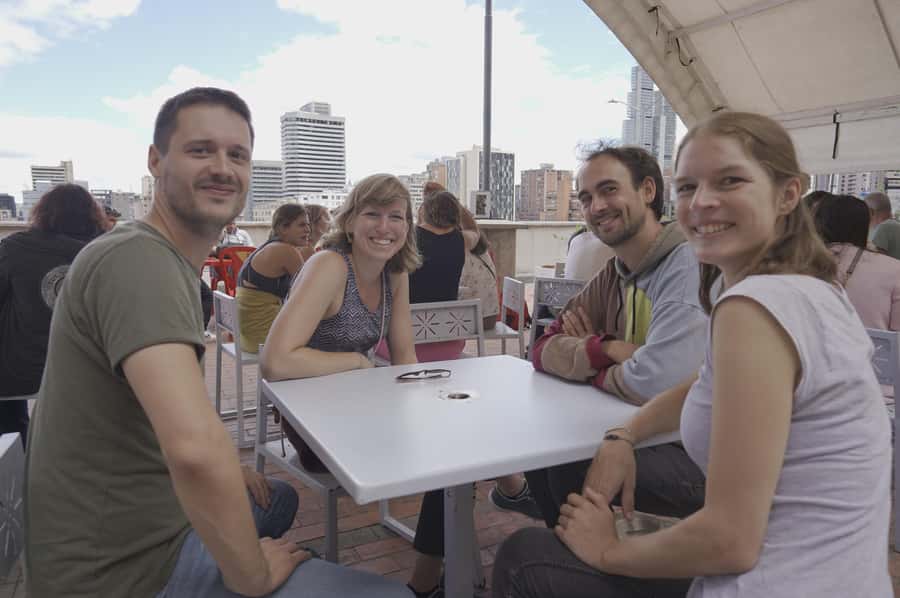
It’s also worth knowing the tour is shared. That usually adds energy, but it can also mean fewer quiet moments for photos or slower listeners. If you prefer a very personal, small-group pace, you should take that into account.
Bolívar Square and the Spanish-era pivot
One of the biggest stops is the grand Bolivar Square and the surrounding buildings. This is where the “capital city” idea becomes visible in stone and layout. You’ll learn the origins of Bogotá as the country’s capital, then zoom into how Spanish power organized the space—plazas, institutions, and the kind of architecture that communicates control.
What I like about this part is that it’s not just about naming buildings. You get the historical reason behind the look of the city: plazas aren’t decorative; they’re political tools. When you stand there after hearing the story, you start noticing details you’d otherwise skip—the way the square pulls people in, the way civic buildings face outward, and how the geography reinforces authority.
If you’re an early-day visitor, this stop is especially helpful. It gives you a mental map for the rest of La Candelaria. Even if you’ve read about Colombia before, the connection between city design and national history makes the square feel more real.
El Bogotazo and the Justice Palace: hard history, told with care
Then the tour shifts into one of Bogotá’s most controversial chapters: the Bogota Riot of 1948, known as El Bogotazo. The guide ties it to Jorge E. Gaitán, so you understand the people and the trigger—not just the chaos.
This isn’t “light” history. You’re walking through space where political violence and national trauma overlap. The value here is balance and clarity: you’re told the event in an objective way, and you’re asked to hold the complexity in your head as you move. That approach matters in a place like Colombia, where history isn’t distant—it’s part of how people interpret the present.
The route also includes the Justice Palace siege. You’ll hear what happened and why it became a lasting symbol. Again, the point isn’t to turn tragedy into a show. It’s to help you understand what’s been shaped by conflict: institutions, public trust, and how the city carries its memories.
Practical note: this segment can feel emotionally intense. If you’re sensitive to political topics, pace yourself. Use the tour’s resting stops, hydrate, and don’t feel pressured to keep rushing just to stay “on pace.”
From El Dorado to real streets: myths that explain the mindset
A surprising highlight is how the tour handles myths—especially the myth of El Dorado. You don’t just hear the legend. You get the idea behind why it caught fire in the first place: wealth, power, and the hope that a hidden truth could fix everything.
For me, this works because it connects the myth to real human behavior you can see in Bogotá today—how rumors move, how people chase opportunity, and how stories get used to justify decisions. When you later pass through markets and economic areas, the myth stops being fantasy and starts feeling like a lens.
This section also sets up the market stops, where tradition and survival meet. You’ll hear about an informal emerald market and other street-level commerce. Even if you don’t plan to buy anything, you’ll learn how local economic life works—what you should watch for, and how the city’s history shows up in everyday trading.
More Bogotá history tours from the founding to today
- Historical tour Bogota★ 5.0 · 72 reviews
- 7-hour City Tour of Historic Bogotá with Monserrate★ 4.7 · 47 reviews
- Bogota’s Historic Center and Monserrate in one day★ 4.9 · 8 reviews
- Candelaria Unveiled: Cool-tural Heritage Walking Tour★ 4.4 · 6 reviews
Concordia Market and chicha tasting: the story in your cup
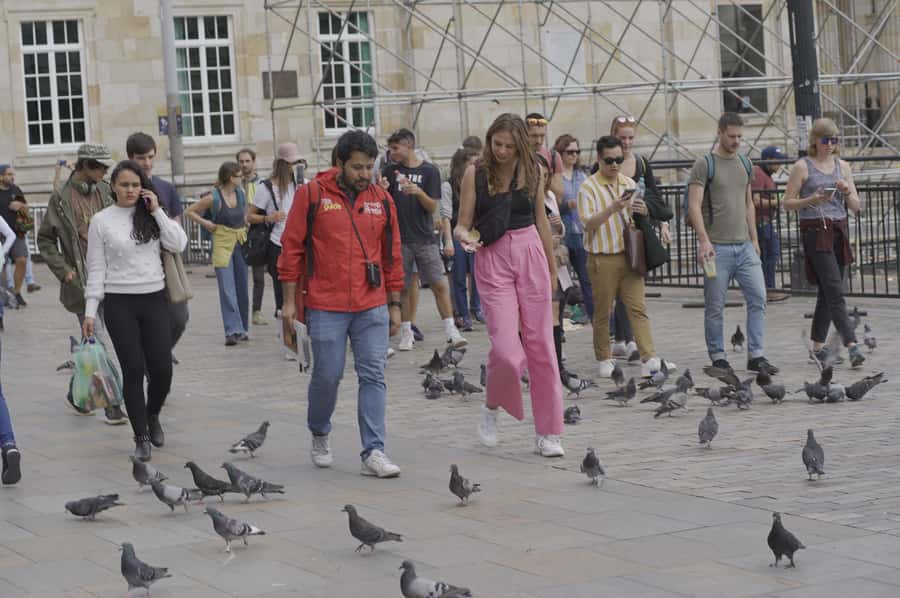
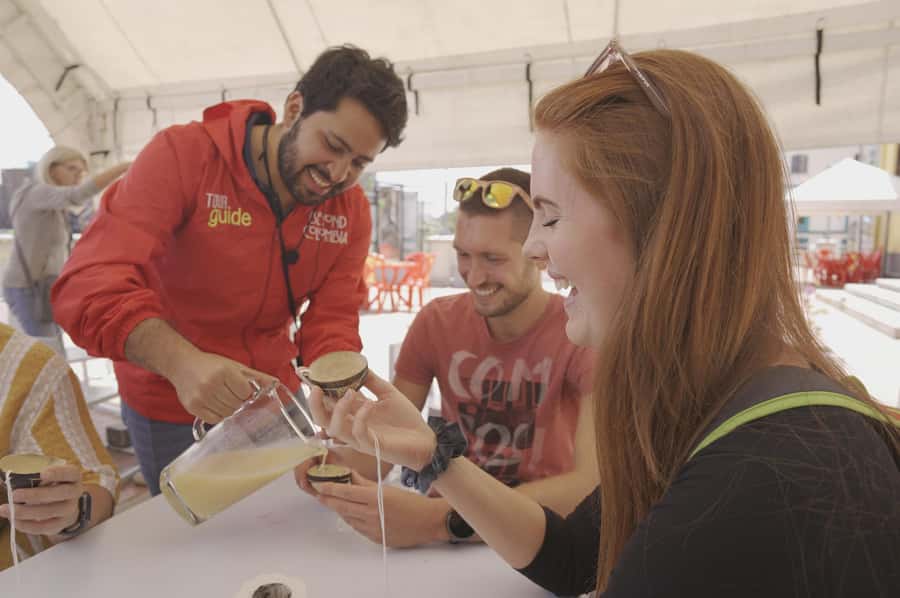
One of the most memorable parts is the Concordia market, where you can learn about chicha as an ancestral drink and as heritage. When it’s available, there’s chicha tasting, and that’s not a random gimmick. It’s a chance to taste a tradition that carries indigenous roots and later cultural layers.
Chicha can sound vague until you’re there, listening to how it’s connected to identity and community. The tour frames it as a living heritage: something people make, share, and pass down. That’s the kind of cultural knowledge that actually sticks, because your senses did some of the work.
If you’re cautious about trying new drinks, you can keep expectations realistic. It’s still a food culture moment, not a luxury tasting. The payoff is the context: you’ll know what you’re drinking and why locals treat it as meaningful.
Also consider flavor and sweetness. The tour doesn’t promise specific types or variations—just that tasting is offered when available—so keep an open mind.
El Embudo alleyway graffitis: street art as resistance
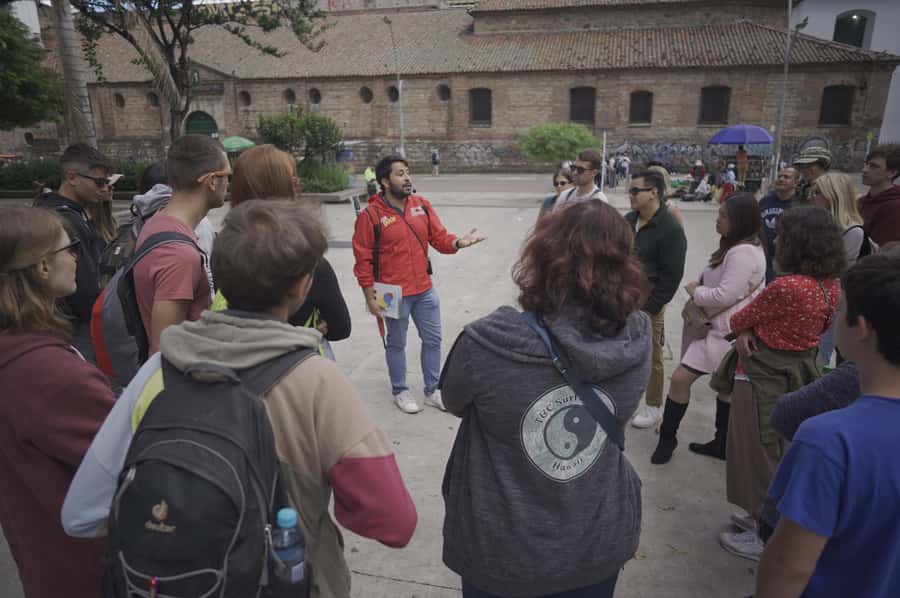
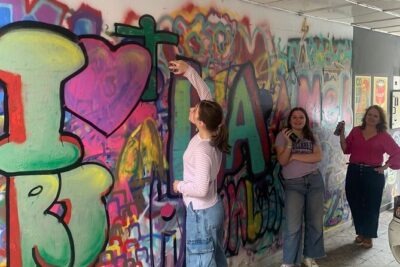
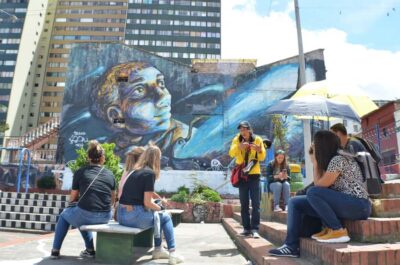
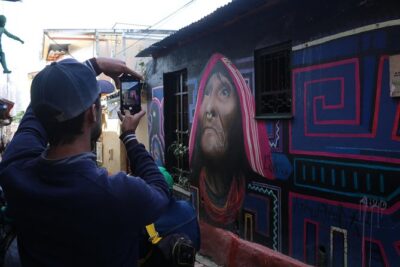
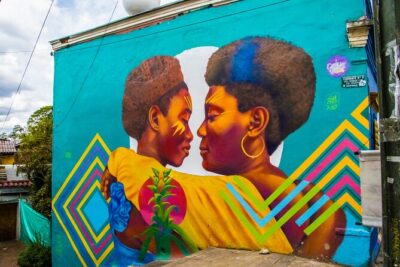
Bogotá is famous for murals and graffiti for a reason, and the tour brings you to one of the iconic spots in Candelaria: El Embudo alleyway. You’ll focus on the graffiti itself—its influence, technique, and role as resistance.
Here’s what makes this part valuable: you’re not just asked to admire art. You’re taught how to read it. The guide helps you connect visuals to meaning—why certain styles appear, how artists communicate messages, and how public walls become history boards when formal systems can’t tell the whole truth.
This is also a great photography stop, but keep it practical. You’re walking, you’ll likely be in crowded areas, and you don’t want flash. The tour also notes no flash photography, and you’ll want to respect that so the moment stays respectful for everyone nearby.
Chorro de Quevedo and the Old Town foundations
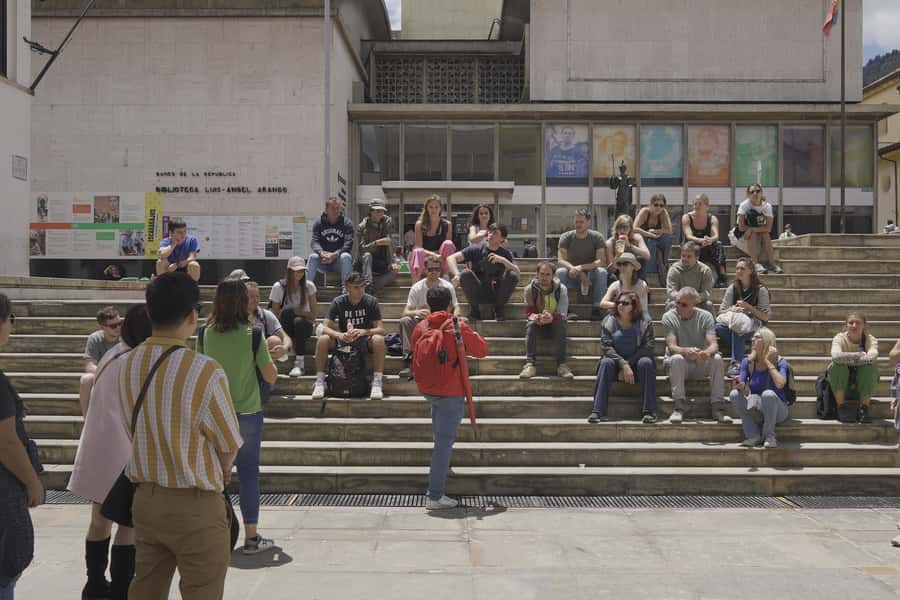
Another key stop is Chorro de Quevedo foundation square. This is where the tour helps you feel Bogotá’s roots, not just its political timeline. The square becomes a starting point for understanding how the city grew—how neighborhoods formed, how people gathered, and how the old center developed into the version you see today.
I like how this segment slows you down without stalling the pace. It’s a chance to absorb atmosphere. You’ll also get practical context that makes later streets make more sense. Even if you don’t memorize dates, you’ll remember the vibe: old Bogotá isn’t museum-silent. It’s a working neighborhood with memory layered into it.
If the weather is warm or rainy, this is also where you’ll notice how you feel at altitude. That’s why bringing water and wearing comfortable shoes isn’t optional—it’s the difference between enjoying the stories and just surviving the climb.
Botero’s Museum and the Cultural Square: art tied to public space
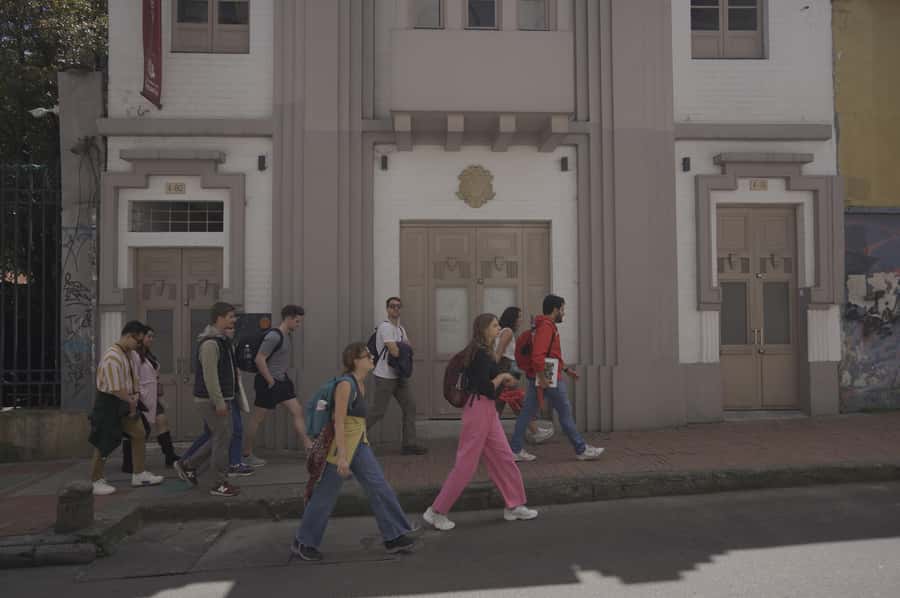
The route includes Botero’s Museum plus a cultural square. This portion gives you a different lens on Bogotá—through art and public symbolism—without pretending art floats above politics.
If you’re a fan of Fernando Botero’s style, you’ll appreciate how the tour connects the artwork to the broader culture and how art becomes part of everyday city identity. If you’re not a fan, you’ll still benefit from the context: you’ll understand how public art can shape a city’s self-image.
One thing to remember: the tour doesn’t promise you a ticketed museum visit inside as a guaranteed paid stop. The experience is designed to avoid surprise charges, so depending on timing and local operations, you might get the exterior and the interpretation more than an all-you-can-go gallery session.
The False Door: a small detail with big meaning
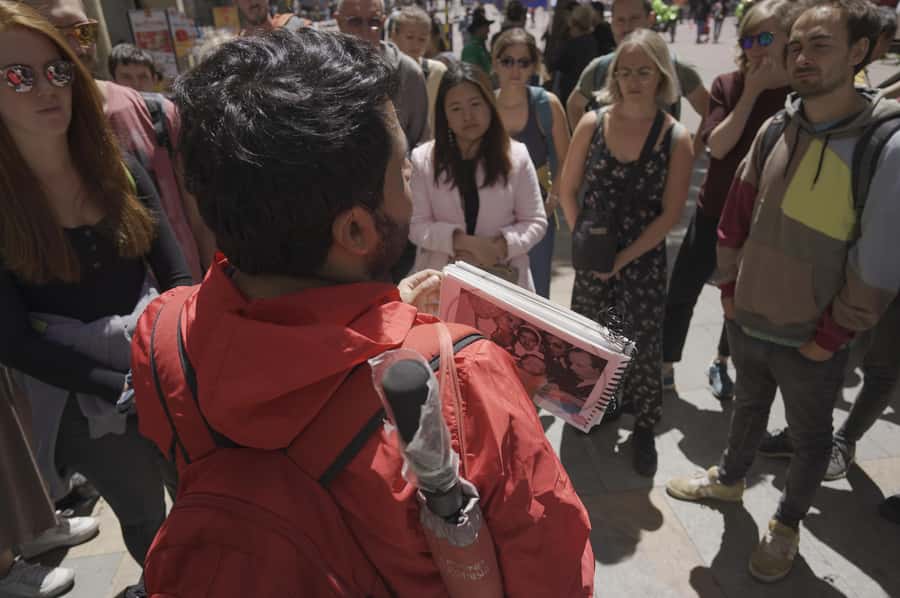
You’ll also hear about the False Door. This is the kind of stop that seems minor at first, but that’s exactly why it works on a walking tour. The guide uses these details to show how symbolism mattered in the way the city developed.
It’s a reminder that historic centers aren’t only grand buildings and big plazas. They’re also shaped by small elements—choices made by builders, planners, and communities that wanted meaning to be visible, even if people didn’t always agree on what the meaning was.
If you like travel where you come away with an eye for details, this is one of those stops that makes the whole route feel richer.
Price and value: what $13 really buys you
At $13 per person for about 150 minutes, this is strong value for Bogotá—especially because you’re getting more than a basic walk. You’re paying for guided interpretation, focused stops in La Candelaria, and context around major events like El Bogotazo and the Justice Palace siege.
The tour also includes an English-speaking guide, plus objective historical framing. That may sound like a promise, but it matters in practice when you’re hearing controversial events. You’ll also get recommendations for lunch, coffee, souvenirs, and more from local allies, and you’re given a wristband for discounts with recommended partners.
What isn’t included is equally important: you should plan on no transport from your hotel, no tickets/entrances, and no drinks or meals beyond the optional chicha tasting when available. For me, that’s fine. Walking tours are at their best when you decide what and where you want to eat afterward.
If you’re on a budget, this is the kind of guided orientation that prevents expensive trial-and-error later.
Practical tips for the uphill 3-hour loop
This is where you set yourself up for a great time.
- Wear comfortable shoes. You’ll walk about 7 km, with stops for listening.
- Bring water. You’ll feel thirsty at some point, and hydration isn’t included.
- Expect an incline. One review called out tiring uphill at altitude (around 8600 ft). Even fit people slow down on a climb.
- Don’t rely on perfect weather. You’ll want rain protection. The tour notes it can’t control weather, and you shouldn’t use capes or umbrellas from a safety standpoint—bring your own rainproof solution.
- Hat and sunscreen help. Bogotá sun can surprise you.
- Leave flash off. The tour asks for no flash photography.
Also, keep your belongings close in crowded areas. That old-school advice still works because La Candelaria can get busy.
Who should book this walking tour?
This tour is a great match if you want:
- A first or second-day orientation to Bogotá’s historic center
- Big-picture context, from Spanish-era organization to 20th-century upheaval
- A culture-and-street-art mix, not just monuments
- An experience that’s guided through real local neighborhoods and markets
It’s not a good fit if you:
- Have mobility impairments or need wheelchair access (the tour states it’s not suitable)
- Want minimal walking or a slow, bench-and-bus pace
- Prefer a very quiet, private experience (it’s a shared group)
Should you book Beyond Colombia’s Historic Downtown walk?
I’d book it if you like your history with street-level details and you’re comfortable with a good walking workout. The $13 price makes it easy to justify, especially because you get guided interpretation, chicha tasting when available, and practical local recommendations afterward.
I’d hesitate only if you hate uphill days, you need accessibility-friendly routes, or you’re hoping for a strictly museum-and-ticket itinerary. This is a walk through living neighborhood space—plazas, alleys, markets, and public art. For the right traveler, it’s one of the best ways to understand Bogotá fast.
FAQ
How long is the Bogota historic downtown tour?
It lasts about 150 minutes, roughly 3 hours.
How much does the tour cost?
The price is $13 per person.
Where do I meet the tour guide?
Meet right in front of the Museo del Oro, with the Beyond Colombia team using red umbrellas.
What’s included in the price?
You get an English-speaking tour guide, sightseeing of key spots in Candelaria, chicha tasting when available, and recommendations for local food, coffee, and souvenirs. You also receive a wristband for discounts with recommended partners.
Is chicha tasting guaranteed?
Chicha tasting is included when available, so it may depend on the day and conditions.
Is there transportation included?
No. It’s a walking tour with walking and resting stops, and there’s no transport to and from your hotel.
Do I need tickets or museum entrances?
Tickets or entrances are not included, and the tour avoids stops where sudden extra charges apply.
Is the tour wheelchair accessible?
No. It is not suitable for people with mobility impairments or wheelchair users.
What should I bring?
Bring comfortable shoes, a hat, a camera, sunscreen, and water (or your preferred hydration).
More Tours in Bogota
- Bogota: Bicycle City Tour
★ 4.9 · 2,156 reviews - Zipaquirá: Salt Cathedral Group Tour with Pickup
★ 4.8 · 1,606 reviews - Bogotá: Guided La Candelaria Walking Tour
★ 4.8 · 1,229 reviews - Bogotá: Private City Tour, Monserrate, Emerald and Botero
★ 4.9 · 798 reviews - Bogotá´s Barrios: El Paraíso Favela Tour with Cable Car
★ 4.8 · 731 reviews - Bogota: Guatavita and Salt Cathedral Daily Group Tour
★ 4.7 · 615 reviews
More Tour Reviews in Bogota
- Bogota: Bicycle City Tour
★ 4.9 · 2,156 reviews - Zipaquirá: Salt Cathedral Group Tour with Pickup
★ 4.8 · 1,606 reviews - Bogotá: Guided La Candelaria Walking Tour
★ 4.8 · 1,229 reviews - Bogotá: Private City Tour, Monserrate, Emerald and Botero
★ 4.9 · 798 reviews - Bogotá´s Barrios: El Paraíso Favela Tour with Cable Car
★ 4.8 · 731 reviews - Bogota: Guatavita and Salt Cathedral Daily Group Tour
★ 4.7 · 615 reviews
More La Candelaria Old Town Walks
- Bogotá: Guided La Candelaria Walking Tour
★ 4.8 · 1,229 reviews - Bogotá: La Candelaria Graffiti & Urban Art Guided Tour
★ 4.7 · 250 reviews - Graffiti Tour in La Candelaria Bogotá with Transportation
★ 5.0 · 68 reviews - VIP Bogota City Tour: Farmers Market, Monserrate, Candelaria, 9hr
★ 5.0 · 66 reviews - Food Tour in La Candelaria Bogotá
★ 5.0 · 63 reviews - La Candelaria Walking Private Tour (3 Hrs.)
★ 5.0 · 51 reviews
Fresh off the review pile: more Bogotá tours to weigh up

La Candelaria Old Town Walks, compared.
 ★ 4.8Guided La Candelaria Walking TourFrom $161,229 reviews
 ★ 4.7La Candelaria Graffiti & Urban Art Guided TourFrom $16250 reviews
 ★ 5.0Graffiti Tour in La Candelaria Bogotá with TransportationFrom $4368 reviews
 ★ 5.0VIP Bogota City Tour: Farmers Market, Monserrate, Candelaria, 9hrFrom $4966 reviews
 ★ 5.0Food Tour in La Candelaria BogotáFrom $6363 reviews
 ★ 5.0La Candelaria Walking Private Tour (3 Hrs.)From $8951 reviews
 ★ 5.0VIP Layover Bogota City Tour: Monserrate, Candelaria, Coffee, 6hrFrom $4445 reviews
 ★ 5.0La Candelaria, Mount Monserrate and Museo del Oro in One Day in BogotaFrom $16041 reviews
Browse the lists this tour appears in