
Reviewed · HISTORICAL TOURS
Historical tour Bogota
Bogotá history fits in three hours. This tour strings together La Candelaria with Bogotá’s power landmarks, using street-level storytelling about indigenous roots, the El Dorado legend, colonization, and independence. I love how it balances famous names and everyday life, so you’re not just staring at buildings. With guides like Paula and Jennifer, the route also feels conversational, not like a lecture in motion.
I also like the way the tour connects big events to real street corners, especially the shift from Botero-and-art culture to the Bogotazo and Colombia’s later violence. By the end, you get practical pointers for your next steps in the center, like where to aim for coffee and meals. One consideration: you’ll cover a lot of ground on foot, and the political topics can feel heavy if that’s not your vibe.
In This Review
- Key highlights I’d plan around
- A fast way to understand Bogotá’s center without getting lost
- The route: what you’ll actually walk past
- Stop-by-stop: Plaza de Bolívar to Rosario Square
- Plaza de Bolívar de Bogotá: where Bogotá’s core story starts
- Teatro Colón Bogotá: national icons and where Bolívar lived
- Museos del Banco de la República (outside): art culture in La Candelaria
- Plaza del Chorro del Quevedo: Bogotá’s foundation and chicha culture
- Plaza de Mercado La Concordia: where you can taste Bogotá’s classics
- Eje Ambiental: Monserrate views and García Márquez’s meeting place
- Jorge Eliécer Gaitán Monument: the Bogotazo explained through a person
- Plazoleta del Rosario: the emerald market and your next-day plan
- The big themes: why these stories belong together
- Botero and García Márquez: culture stops that actually help you see the city
- Pace, group size, and how to prepare for a smooth walk
- Price and value: why this feels like a smart first-booking
- Who should book this tour (and who might skip it)
- Should you book this Historical Tour of Bogotá?
- FAQ
- How long is the Bogotá historical walking tour?
- Where do I meet, and where does the tour end?
- Is the tour actually free at the sights?
- Should I bring an umbrella?
- Are snacks or drinks included?
- Do I need to buy a physical ticket?
- What happens if I need to cancel?
Key highlights I’d plan around
- La Candelaria walking route with major squares and landmarks in about three hours
- Storytelling themes that connect El Dorado, independence, and the Bogotazo to Bogotá streets
- Art and literature stops that bring Botero and Gabriel García Márquez into focus
- Local-life moments like chicha culture and what to look for in traditional markets
- A flexible rain plan, since the tour doesn’t cancel for bad weather—bring an umbrella
More Bogotá history tours from the founding to today

A fast way to understand Bogotá’s center without getting lost
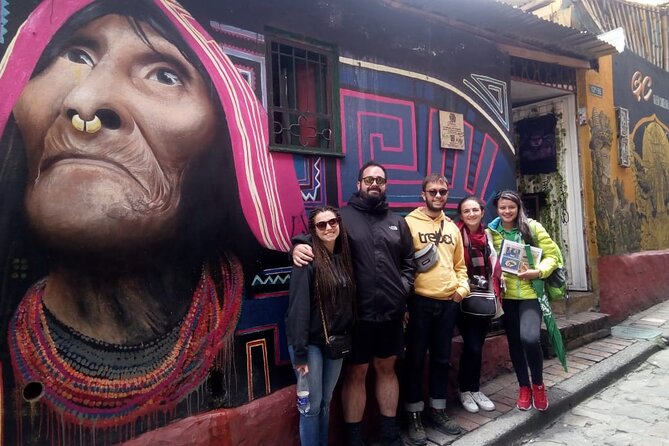
If you want to understand Bogotá beyond the obvious photos, start on foot in the historic core. This tour focuses on the lanes, plazas, and cultural blocks that shaped the city’s identity, from early Indigenous presence to modern national events. It’s the kind of route that helps you later when you’re picking museums, choosing neighborhoods, or trying to follow what people are talking about.
You’ll also see why guides keep bringing up certain names and stories. The city’s identity isn’t just dates on a timeline—it’s murals, plazas, markets, and monuments all tied to politics and culture. That’s why I like this style of walking history: it makes the place do the explaining.
The route: what you’ll actually walk past
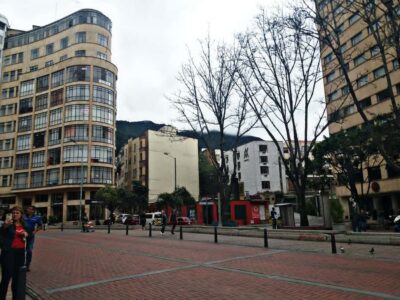
This tour is built around a tight loop through key points in the center. You’ll move between major plazas, viewpoints, cultural spaces, and a couple of market areas where you can taste or buy simple things at your own pace. The walking time stays manageable for most people with moderate fitness, and the group size is capped at 30.
A big practical bonus: the stops are scheduled with free-entry time listed for the sights along the way. So you’re not playing ticket-purchasing games while trying to keep up.
Stop-by-stop: Plaza de Bolívar to Rosario Square
Plaza de Bolívar de Bogotá: where Bogotá’s core story starts
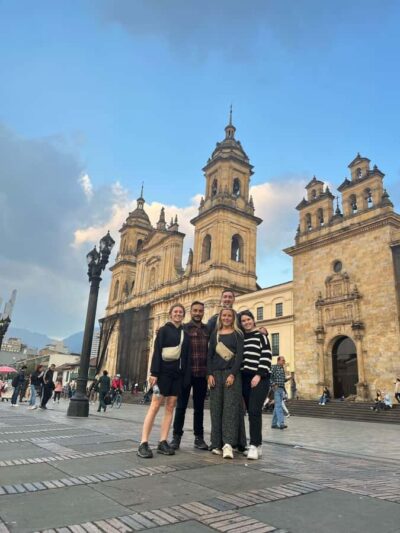
Your first real anchor is Plaza de Bolívar, which sets the tone for the entire tour. This is where you learn how Bogotá began as the capital and why the surrounding buildings matter. It’s a useful start point because you can later recognize the same political geography from other vantage points.
A drawback? If you’re hoping for a calm, quiet introduction, this plaza is a busy stage. The guide’s job is to help you read it quickly anyway, and that’s exactly what you need at the beginning.
- Bogota: Bicycle City Tour★ 4.9 · 2,156 reviews
- Zipaquirá: Salt Cathedral Group Tour with Pickup★ 4.8 · 1,606 reviews
- Bogotá: Guided La Candelaria Walking Tour★ 4.8 · 1,229 reviews
- Bogotá: Private City Tour, Monserrate, Emerald and Botero★ 4.9 · 798 reviews
Teatro Colón Bogotá: national icons and where Bolívar lived
Next comes Teatro Colón, one of Colombia’s notable wonders. The tour uses the theater as a springboard to talk about the kind of power and presence that shaped national life—and you’ll hear that Simón Bolívar lived there. Even if you don’t go inside, the stop gives you a mental map of how cultural institutions and political history overlap in Bogotá.
This is also a good place to pause and orient your eyes. After one stop like this, the rest of the route feels less random.
Museos del Banco de la República (outside): art culture in La Candelaria
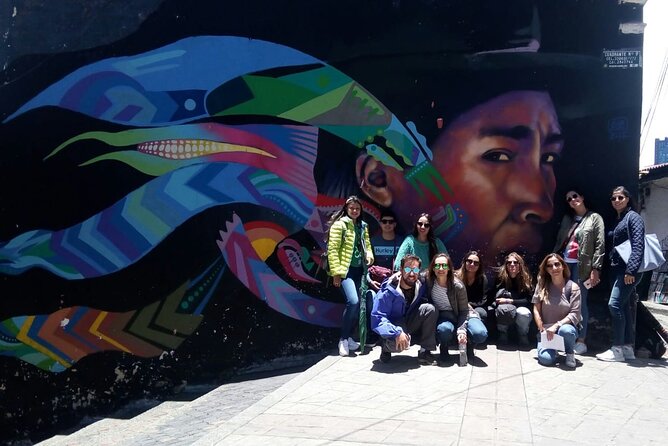
Then you move into the cultural block around Museos del Banco de la República. Even from the outside, the stop is meant to connect you to what La Candelaria became as an arts-and-history zone. The guide also ties in the life of Fernando Botero, so you understand why his name keeps popping up around town.
If you’re the type who likes seeing the references first, this works. You’ll know what to look for when you later spot Botero-related art.
Plaza del Chorro del Quevedo: Bogotá’s foundation and chicha culture
At Plaza del Chorro del Quevedo, you get another foundation-level moment. You’ll hear why this square is important for Bogotá’s origins, and you’ll also learn about chicha—including why it was prohibited at one point.
This is one of those stops that makes history feel local. It’s not just who won wars; it’s how everyday traditions got shaped by authority. And it’s the kind of detail you remember when you’re deciding what to try.
Plaza de Mercado La Concordia: where you can taste Bogotá’s classics
Next is Plaza De Mercado La Concordia, a market square where you’re encouraged to slow down a bit on your own time. The tour gives you options: you can drink traditional chicha, have a typical Colombian juice, or browse for small souvenirs. The point isn’t shopping—it’s seeing how culture moves through food and daily routines.
One small consideration: markets are vivid and active. If you’re sensitive to crowds or smells, take it at a gentle pace and step aside when you need a breath.
Eje Ambiental: Monserrate views and García Márquez’s meeting place
At Eje Ambiental, you’ll get a nice view toward Monserrate—the hill that anchors a lot of Bogotá’s skyline. You’ll also learn about a square connected to Gabriel García Márquez, including that he used to go there for social meetings. That blend of landscape + literature makes this stop feel like it belongs to the city’s imagination, not just its formal history.
This is also a useful planning moment. If you’re thinking about visiting Monserrate later, this viewpoint gives you a clearer sense of direction.
Jorge Eliécer Gaitán Monument: the Bogotazo explained through a person
The next stop is the Jorge Eliecer Gaitán Monument, where the guide explains who he was and why he mattered in Colombia. The route then ties that story to the Bogotazo and what it has to do with the country’s broader violence.
This part is often where the tour becomes emotionally sharper. It’s historically important, and it helps you understand why certain political stories still resonate in Bogotá.
Plazoleta del Rosario: the emerald market and your next-day plan
Finally, you reach the Plazoleta del Rosario, known for its emerald market. The tour frames what you’re seeing—how this stone gets marketed in the area—so you understand the context rather than just looking at goods. You’ll end here and the guide offers recommendations for your stay, including which restaurants to consider.
This last stop is the “okay, now what?” moment. You’ll leave with a short list of directions that fit your interests and your time.
The big themes: why these stories belong together
This tour doesn’t treat history like separate chapters. It ties together legends, culture, and conflict so the city starts to make emotional sense.
You’ll hear the El Dorado legend discussed alongside colonization, independence, and the building of the capital. That matters because the legend isn’t just fantasy—it reflects how Europeans imagined wealth and how Indigenous presence and local power were viewed and reshaped.
Then the tour shifts to modern national events, including the Bogotazo and the violence that followed. The goal here isn’t to shock you for its own sake. It’s to explain why politics in Bogotá isn’t abstract. It lives in monuments, names, and the way people talk about the past.
Botero and García Márquez: culture stops that actually help you see the city
Two of the strongest “memory hooks” in this tour are Fernando Botero and Gabriel García Márquez. Botero’s presence gives you a lens for Colombian art and a reason his name shows up across the city’s cultural conversation. And García Márquez ties literature to specific spaces—so you can picture the author as part of everyday social life.
In practice, these stops also make your later museum choices easier. Even if you don’t have time for everything, the tour helps you decide what fits your taste.
Pace, group size, and how to prepare for a smooth walk
This is a 3-hour walking tour with a maximum of 30 travelers. That size is important: it usually keeps the guide’s attention manageable and helps the group move without chaos. One of the most common praises is that the tour feels informative without being tiring, which is exactly what you want for a first visit to the center.
What you should bring is simple:
- Comfortable walking shoes for cobblestones and city sidewalks
- A small umbrella, since the tour won’t be canceled for bad weather
- Water, since snacks and drinks aren’t included
Also, the tour is listed as near public transportation, which helps if you need to rejoin from somewhere else. And service animals are allowed, so the experience can work for more travelers.
Price and value: why this feels like a smart first-booking
The price is listed at $19.77 per person, and it’s positioned as an essential introduction to Bogotá’s history and culture. At that cost, the value comes from efficiency: you get a structured route through major sites, plus context for what you’re looking at, plus end-of-tour recommendations.
The other value lever is that it’s a group format. You’re not paying for a private guide’s one-on-one time, but you still get guided interpretation at each stop instead of wandering blind through La Candelaria. If you only have a small window in Bogotá, this kind of guided orientation can save you hours of guesswork.
One more practical point: it’s offered with a mobile ticket and group discounts. That tends to make it easier to manage if you’re traveling with someone else or arriving at different times.
Who should book this tour (and who might skip it)
I’d point you toward this tour if you’re:
- In Bogotá for a short stay and want the center explained fast
- Curious about how politics shaped daily life and public spaces
- Interested in art and literature alongside major historical events
You might skip it if:
- You dislike heavy political topics and prefer lighter cultural tours
- You don’t want to walk much in a dense historic area
- You’re looking for a museum-focused day rather than a streets-and-squares orientation
Should you book this Historical Tour of Bogotá?
Yes—if you want a grounded introduction to Bogotá’s historic core, this is an efficient, guide-led way to get there. The route hits the key landmarks that shape how the city feels, and it mixes big national stories with local culture like chicha and market life.
Book it when you still have time to use what you learn. The best payoff is planning your next day with the guide’s recommendations—especially in the center where it’s easy to waste time figuring out where to go.
FAQ
How long is the Bogotá historical walking tour?
It lasts about 3 hours.
Where do I meet, and where does the tour end?
You start at Cra. 7 #11-10, La Candelaria and the tour ends at Av Jimenez de Quesada #6-71, La Candelaria, with the final stop at Rosario Square.
Is the tour actually free at the sights?
The scheduled stops list free admission tickets for the sights included along the route.
Should I bring an umbrella?
Yes. The tour is not canceled for bad weather, so bringing an umbrella is recommended.
Are snacks or drinks included?
No. Snacks, drinks, and meals are not included, though you can choose to buy things on your own at stops like the market.
Do I need to buy a physical ticket?
No. You can use a mobile ticket.
What happens if I need to cancel?
You can cancel up to 24 hours in advance for a full refund. If you cancel less than 24 hours before the start time, the amount paid is not refunded.
More Bogotá History Tours
- Shared Tour of Bogota’s Historic Downtown (La Candelaria)
★ 4.7 · 100 reviews - 7-hour City Tour of Historic Bogotá with Monserrate
★ 4.7 · 47 reviews - Bogota’s Historic Center and Monserrate in one day
★ 4.9 · 8 reviews - Candelaria Unveiled: Cool-tural Heritage Walking Tour
★ 4.4 · 6 reviews
More Tours in Bogota
- Bogota: Bicycle City Tour
★ 4.9 · 2,156 reviews - Zipaquirá: Salt Cathedral Group Tour with Pickup
★ 4.8 · 1,606 reviews - Bogotá: Guided La Candelaria Walking Tour
★ 4.8 · 1,229 reviews - Bogotá: Private City Tour, Monserrate, Emerald and Botero
★ 4.9 · 798 reviews - Bogotá´s Barrios: El Paraíso Favela Tour with Cable Car
★ 4.8 · 731 reviews - Bogota: Guatavita and Salt Cathedral Daily Group Tour
★ 4.7 · 615 reviews
More Tour Reviews in Bogota
- Bogota: Bicycle City Tour
★ 4.9 · 2,156 reviews - Zipaquirá: Salt Cathedral Group Tour with Pickup
★ 4.8 · 1,606 reviews - Bogotá: Guided La Candelaria Walking Tour
★ 4.8 · 1,229 reviews - Bogotá: Private City Tour, Monserrate, Emerald and Botero
★ 4.9 · 798 reviews - Bogotá´s Barrios: El Paraíso Favela Tour with Cable Car
★ 4.8 · 731 reviews - Bogota: Guatavita and Salt Cathedral Daily Group Tour
★ 4.7 · 615 reviews
Fresh off the review pile: more Bogotá tours to weigh up

Historical Tours, compared.
 ★ 4.7Shared Tour of Bogota’s Historic Downtown (La Candelaria)From $13100 reviews
 ★ 4.77-hour City Tour of Historic Bogotá with MonserrateFrom $11847 reviews
 ★ 4.5From bogota: Salt Cathedral tour a Cultural Heritage TourFrom $7023 reviews
 ★ 4.9Bogota’s Historic Center and Monserrate in one dayFrom $1168 reviews
 ★ 4.4Candelaria Unveiled: Cool-tural Heritage Walking TourFrom $166 reviews
Browse the lists this tour appears in