
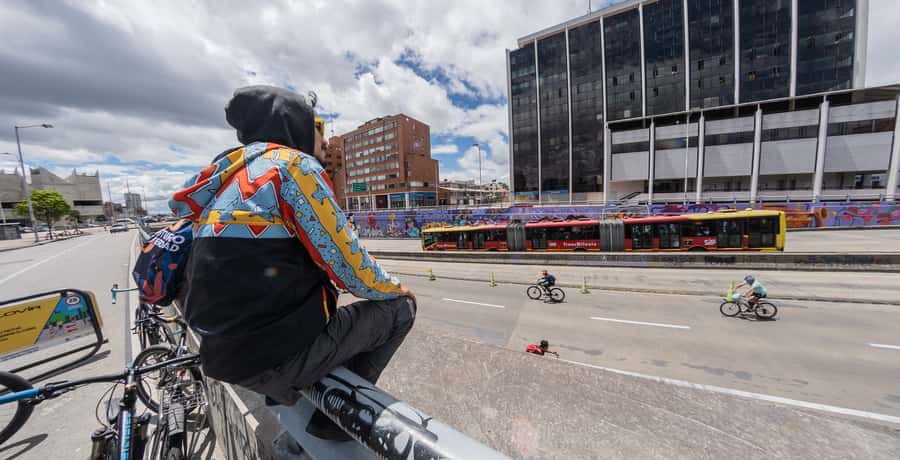
Reviewed · LA CANDELARIA GRAFFITI & STREET ART
Biking in Full Color: Urban Art Bike Tour
Street art on wheels works surprisingly well. This Bogotá tour pairs bike-lane cruising with storytelling from Diego, a working urban artist, and it spotlights female artists while you track down a peace mural tied to Colombia’s post-conflict era. The main thing to consider is that you’re cycling about 13 km in 3 hours, so wear decent sports shoes and plan to travel light since backpacks aren’t allowed.
You’ll start in La Candelaria, then roll through four neighborhoods—Centro, Teusaquillo, Santa Fe, and La Macarena—where the street art gets more political, more personal, and more connected to everyday life. If you catch a Ciclovía Sunday, you’ll benefit from extra open routes and the city’s Sunday-morning bike energy, which makes the ride feel easier and more festival-like.
In This Review
- Key things to know before you ride
- Why Bogotá is a perfect city for a street-art bike tour
- Starting in La Candelaria: the red wall meet-up and first artwork cues
- The ride through Centro, Teusaquillo, Santa Fe, and La Macarena
- Centro: where you start to read the city
- Teusaquillo: noticing style and message shifts
- Santa Fe: meaningful art that links people and place
- La Macarena: giant murals and social context landing harder
- The coffee factory stop: a smart break mid-story
- Female artists on the walls: why that focus matters
- The peace mural and post-conflict Colombia: art as a social signal
- Bike lanes or Ciclovía Sundays: how the transport shapes the vibe
- Guides, storytelling, and why Diego’s artist perspective helps
- Price and value: is $62 per person worth it?
- What to bring, what not to bring, and how to avoid a hassle
- Who should book this Bogotá street-art bike tour
- Should you book?
- FAQ
- Where is the meeting point for the Urban Art Bike Tour?
- How long is the tour?
- How far do we bike during the tour?
- Does this tour run on Ciclovía Sundays?
- What neighborhoods are included?
- What languages is the live tour guide available in?
- Are there private or small-group options?
- What should I wear or bring?
- Are backpacks or valuables allowed?
- Is there free cancellation, and can I pay later?
Key things to know before you ride
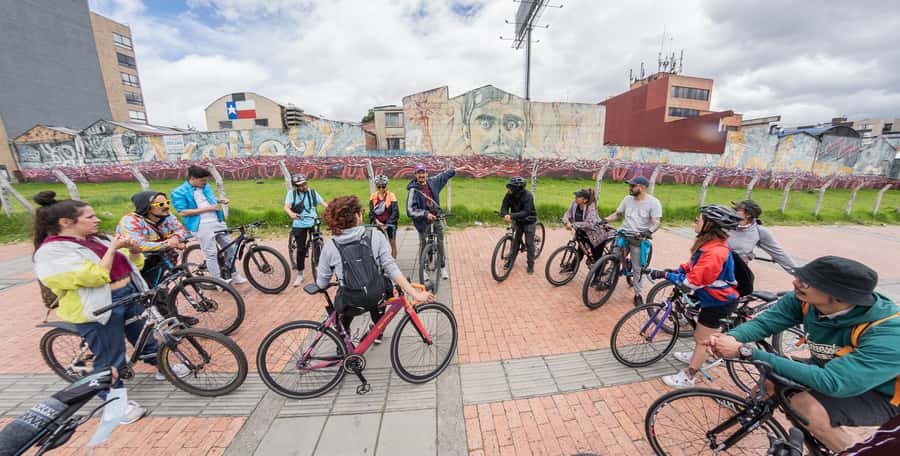
- 13 km covered in about 3 hours, so it’s active but not all-day punishment
- Four neighborhoods (Centro, Teusaquillo, Santa Fe, La Macarena) to see how themes shift city to city-block
- Women’s street-art illustrations are a core focus, not an afterthought
- A peace-and-post-conflict mural gives the trip a strong social context
- Stops include a coffee factory plus large murals you’ll actually have time to look at
- Rain or shine with a rain poncho provided, so you’re not stuck cancelling
Hooked on the graffiti walls? More La Candelaria street-art tours to follow
Why Bogotá is a perfect city for a street-art bike tour
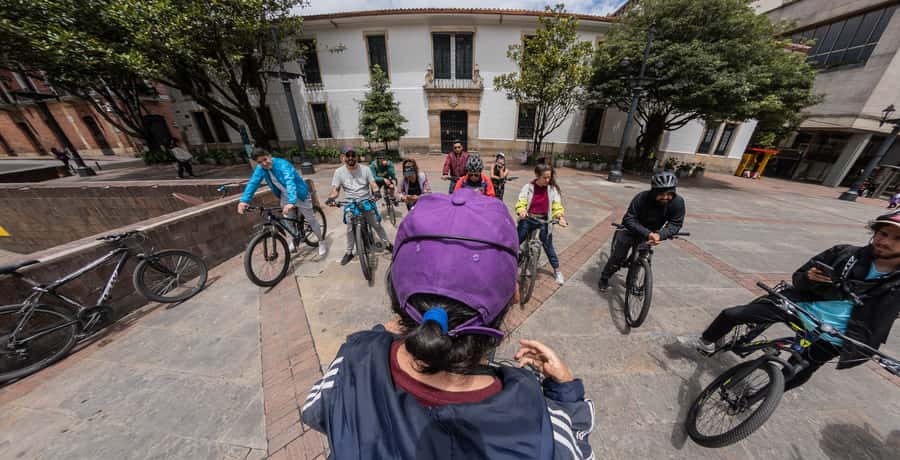
Bogotá is one of those cities where the walls carry messages. Some art is loud and graphic, some is political, and some is quieter in a way that makes you slow down. The bike tour format matters because you’re not just standing still in one area. You’re moving through the city the way locals do—fast enough to cover ground, slow enough to read what’s on the wall.
I like that the tour treats street art as something with context. You don’t just get pretty images. You get the why: how murals respond to history, social struggle, and the ongoing push for peace and community.
Starting in La Candelaria: the red wall meet-up and first artwork cues
You’ll meet in front of the big red wall at Carrera 3#12-52 in La Candelaria. Look for your guide wearing a purple hoodie, cap, or umbrella—basically, your cue to spot them quickly even if you’re a little early and wandering.
In practice, this start matters because La Candelaria sets the tone. It’s the kind of neighborhood where you can feel the city layered with old and new. Getting oriented here helps you understand what you’re about to see when you ride out into Centro and the other districts.
The early minutes also help with pacing. Your guide will guide your eyes to what to notice: the styles, the choices behind certain images, and the way murals are placed where people actually pass by.
The ride through Centro, Teusaquillo, Santa Fe, and La Macarena
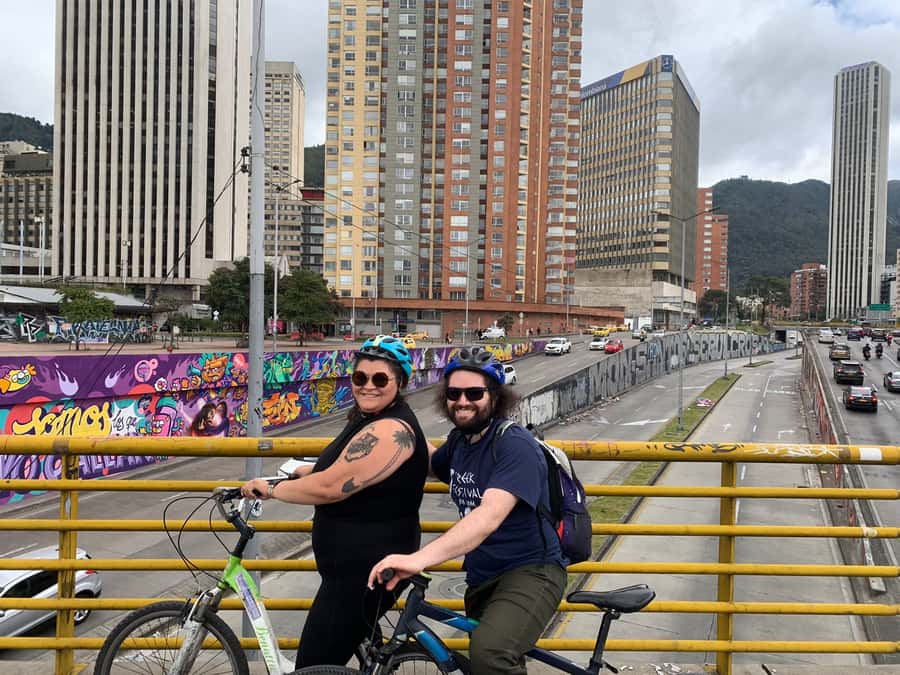
This tour is built around contrasts. You move through four diverse neighborhoods, and your guide uses those changes to explain how Bogotá’s street art works in real life—shaped by the block, the community, and the city’s shifting priorities.
Here’s what that means for you while you’re riding:
Centro: where you start to read the city
Centro is a natural starting point because it’s where you’ll likely spot art that feels more public-facing—images meant to be seen quickly by pedestrians, riders, and commuters. Expect your guide to connect street art themes to the urban rhythm around you, including how the city’s architecture and development influence what gets painted where.
Drawback to keep in mind: because this is central, it can feel busy. If you’re sensitive to crowds, plan to focus on the guide’s pointers when you stop and don’t try to stare at every wall at the same time.
Rather roll than walk? More Bogotá bike and scooter tours to jump on
- Bogota: Bicycle City Tour★ 4.9 · 2,156 reviews
- Bogotá: Shared Bike Tour★ 4.6 · 83 reviews
- Bogotá Private Bike Tour with Transportation★ 5.0 · 65 reviews
- Bogota scooter tour★ 5.0 · 46 reviews
Teusaquillo: noticing style and message shifts
As you pedal onward toward Teusaquillo, pay attention to how the visual tone can change. The tour is designed so that you’re not just following a route—you’re comparing neighborhoods. Your guide’s job is to help you see patterns: what artists choose to emphasize and how they reuse symbols across different parts of the city.
This part of the tour is great if you like art that’s political but not abstract. You’ll get enough story context to connect imagery to real social issues without needing a museum background.
Santa Fe: meaningful art that links people and place
Santa Fe is where the tour’s “meaning” side becomes harder to ignore. The route is built to include street art that carries messages about struggle, identity, and the search for peace. You’ll be in the right mindset for deeper listening now because you already learned how the guide interprets art earlier in the ride.
One practical consideration: this is also where your attention needs to be steady. When you’re cycling between stops, don’t multitask too hard. Save your phone time for when you’re standing still long enough to really look.
La Macarena: giant murals and social context landing harder
La Macarena is one of the stops where the tour leans into scale—think giant murals you can’t really take in while rushing past. The tour includes these large wall moments on the bike route, and the guide’s storytelling is especially useful here because big murals can look chaotic until you understand the symbols and history behind them.
If you enjoy the visual impact of public art, this is likely where you’ll get your best “I get it now” experience.
The coffee factory stop: a smart break mid-story
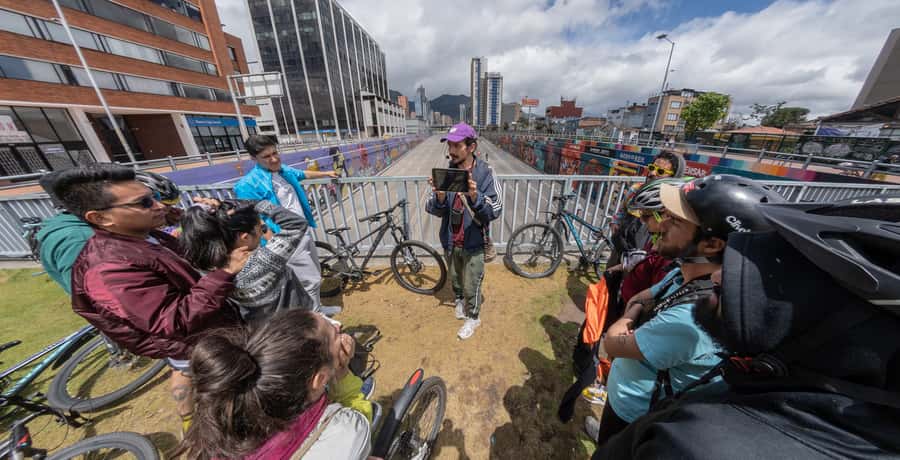
You’ll stop at a coffee factory during the 3-hour loop. Even if you’re not a coffee super-fan, this break is useful because it resets your energy and gives your brain a short pause from reading murals.
More importantly, it fits the tour’s theme: Bogotá’s everyday culture. Street art can feel heavy when it’s talking about social conflict and change, so having a normal, local stop helps balance the emotional weight of the art you’ve been seeing.
If you’re the type who likes to take photos, use this break wisely. Look at your route plan mentally and think about which murals you want to revisit later in your own time.
Female artists on the walls: why that focus matters
One of the highlights is exploring walls adorned with illustrations by female artists. That matters because street art is often discussed as if it’s one broad genre, but the viewpoint changes when women’s voices lead. You can expect the tour to highlight artwork where illustration style, subject matter, and symbolism connect to identity and representation.
This is also one reason the tour feels different from a generic “graffiti sightseeing” walk. The guide isn’t just pointing at murals. They’re connecting the imagery to broader cultural meaning—and that’s where the experience becomes more than sightseeing.
The peace mural and post-conflict Colombia: art as a social signal
Another standout highlight is a mural symbolizing peace and post-conflict. This is the kind of stop that can change how you see everything else. When you understand that some murals are responding to real social processes—reconciliation, community rebuilding, and the push toward peace—you stop treating street art as decoration.
Instead, you see it as public conversation. Painted in a place where people actually live and move through the city, it becomes a message that can’t be locked behind a ticket booth.
If you prefer art that stays purely aesthetic, this might feel like a heavy thread. But if you want meaning without being lectured, this tour’s storytelling approach is designed to keep it human.
Bike lanes or Ciclovía Sundays: how the transport shapes the vibe
The tour uses city bike lanes, or on Ciclovía Sundays it leans into the special Sunday setup when cyclists get more routes and cultural activities in the mix.
That affects your experience in a few real ways:
- The ride can feel smoother and more spacious when those bike-friendly routes are open.
- Stops feel less frantic because you’re not fighting the usual traffic flow as much.
- You get the city-morning mood, which can make the murals feel more alive.
If you’re choosing your day, I’d consider going on a Sunday if Ciclovía is running and your schedule allows it. The bike-energy effect is real, and it tends to make the whole tour feel lighter.
Guides, storytelling, and why Diego’s artist perspective helps
The tour’s guide is a major part of the value. The info you have points to a guide who isn’t just talking about street art—they’re connected to it and share insight into the artworks, including history, techniques, and meanings.
In the feedback I was given, Diego stands out as a guide who explains art and story across multiple neighborhoods in a way that feels engaging and grounded in the local community. Even if you don’t share his background in urban art, you’ll likely appreciate how this kind of guide notices details you’d miss on your own.
This is a tour you’ll enjoy more if you like questions and explanations. The route has multiple stops, so you can actually process what you see instead of just collecting photos.
Price and value: is $62 per person worth it?
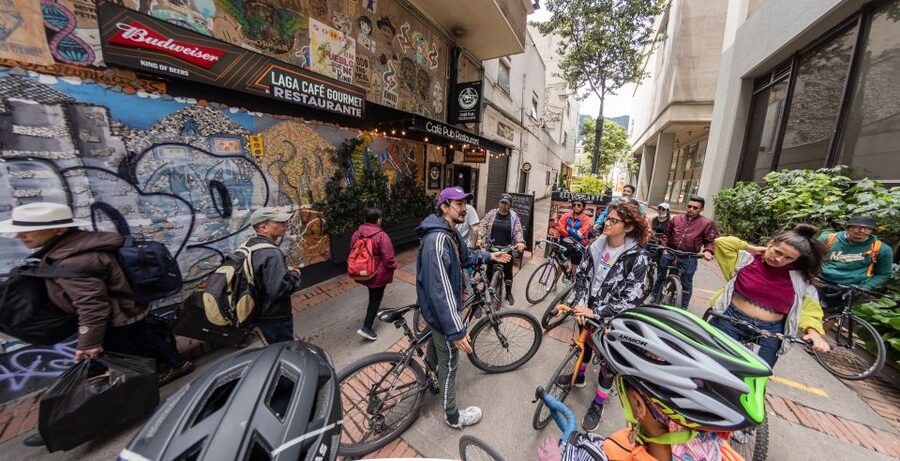
At $62 per person for 3 hours, you’re paying for more than a bike ride. You’re buying:
- Guided interpretation of murals and street art meanings
- Coverage of 13 km across four neighborhoods
- Stops that include major visual moments and a coffee factory break
- A guide who brings both cultural storytelling and an artist’s eye
When it’s priced like this, the question is simple: do you want the context? If you’re the type who walks past murals without knowing what to look for, a paid guide can be a big shortcut. You’ll leave with a clearer sense of how Bogotá’s street art connects to social struggle and social change.
Balanced take: if you only want a quick photo hunt and you don’t care about stories or symbolism, you might decide to DIY. But if you want the art to make sense as you ride, the value becomes easier to see.
What to bring, what not to bring, and how to avoid a hassle
This tour is straightforward, but you should prep your day.
Bring:
- Sports shoes (you’ll be riding and stopping, so comfortable footing matters)
Not allowed:
- Backpacks
- Valuables
You’ll also ride rain or shine. A rain poncho is provided, which is a nice safety net if weather shifts during the morning.
One practical approach: wear a simple day outfit with secure pockets. Keep your essentials minimal so you’re not thinking about bags every time you stop for a mural.
Who should book this Bogotá street-art bike tour
This is a great match if you:
- Want Bogotá street art with meaning, not just visuals
- Like biking and can handle a ride that covers about 13 km
- Enjoy multi-neighborhood city experiences where you compare how themes shift from district to district
- Are interested in the role of women artists and in murals tied to peace and post-conflict stories
It may be less ideal if you:
- Get uncomfortable with political or socially focused artwork
- Prefer very slow, museum-style pacing rather than an active ride with multiple stops
- Need to carry a backpack or bulky items
Should you book?
If your ideal Bogotá day includes a bike route plus guided mural interpretation, I think this is an easy yes. At $62 for a 3-hour loop that covers 13 km across four neighborhoods, you’re getting both movement and context—two things that make street art feel real instead of random.
I’d book it especially if you care about seeing the “why” behind murals, including the emphasis on female artists and a peace-themed post-conflict message. If you just want a quick look, go find a self-guided route. But if you want to understand what you’re seeing as you ride, this is a strong way to do it.
FAQ
Where is the meeting point for the Urban Art Bike Tour?
You meet in front of the big red wall at Carrera 3#12-52 in La Candelaria.
How long is the tour?
The tour lasts 3 hours.
How far do we bike during the tour?
The guided route covers 13 km of bike trails.
Does this tour run on Ciclovía Sundays?
Yes. It uses city bike lanes, and on Ciclovía Sundays it takes advantage of the extra bike routes and cultural activities.
What neighborhoods are included?
The tour passes through four neighborhoods: Centro, Teusaquillo, Santa Fe, and La Macarena.
What languages is the live tour guide available in?
The live guide is available in English, Spanish, French, German, and Italian.
Are there private or small-group options?
Yes. Private or small groups are available.
What should I wear or bring?
Wear sports shoes.
Are backpacks or valuables allowed?
No. Backpacks and valuables are not allowed.
Is there free cancellation, and can I pay later?
There is free cancellation up to 24 hours in advance for a full refund, and you can reserve now and pay later.
More Tour Reviews in Bogota
- Bogota: Bicycle City Tour
★ 4.9 · 2,156 reviews - Zipaquirá: Salt Cathedral Group Tour with Pickup
★ 4.8 · 1,606 reviews - Bogotá: Guided La Candelaria Walking Tour
★ 4.8 · 1,229 reviews - Bogotá: Private City Tour, Monserrate, Emerald and Botero
★ 4.9 · 798 reviews - Bogotá´s Barrios: El Paraíso Favela Tour with Cable Car
★ 4.8 · 731 reviews - Bogota: Guatavita and Salt Cathedral Daily Group Tour
★ 4.7 · 615 reviews
More Bogotá Bike & Scooter Tours
- Bogota: Bicycle City Tour
★ 4.9 · 2,156 reviews - Bogotá: Shared Bike Tour
★ 4.6 · 83 reviews - Bogotá Private Bike Tour with Transportation
★ 5.0 · 65 reviews - Bogota scooter tour
★ 5.0 · 46 reviews - Bogotá Private Bike Tour with Transportation
★ 4.6 · 14 reviews
More La Candelaria Graffiti Tours
- Bogotá: La Candelaria Graffiti & Urban Art Guided Tour
★ 4.7 · 250 reviews - Fun Graffiti Workshop: The Art of Aerosol and Color
★ 5.0 · 73 reviews - Graffiti Tour in La Candelaria Bogotá with Transportation
★ 5.0 · 68 reviews - Bogotá: Graffiti Tour el mejor recorrido de arte urbano
★ 4.7 · 41 reviews - Graffiti Tour in La Candelaria Bogotá with Transportation
★ 4.9 · 24 reviews - Graffiti Tour: a fascinating walk through a street art City
★ 5.0 · 5 reviews
Fresh off the review pile: more Bogotá tours to weigh up

La Candelaria Graffiti & Street Art, compared.
 ★ 4.7La Candelaria Graffiti & Urban Art Guided TourFrom $16250 reviews
 ★ 5.0Fun Graffiti Workshop: The Art of Aerosol and ColorFrom $5873 reviews
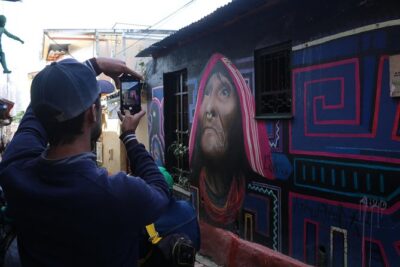 ★ 5.0Graffiti Tour in La Candelaria Bogotá with TransportationFrom $4368 reviews
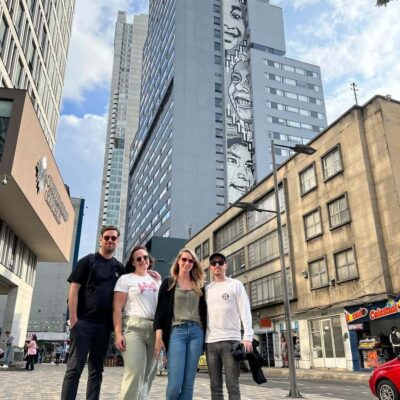 ★ 4.7Graffiti Tour el mejor recorrido de arte urbanoFrom $1341 reviews
★ 4.9Graffiti Tour in La Candelaria Bogotá with TransportationFrom $4824 reviews
★ 4.7Graffiti Tour el mejor recorrido de arte urbanoFrom $1341 reviews
★ 4.9Graffiti Tour in La Candelaria Bogotá with TransportationFrom $4824 reviews
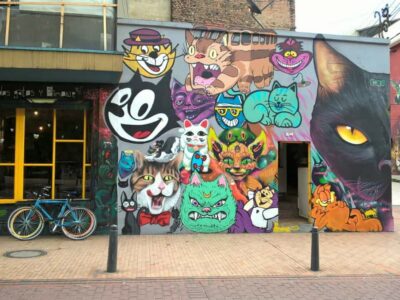 ★ 5.0Bogotá Street Art and Graffiti Tour 3 HrsFrom $865 reviews
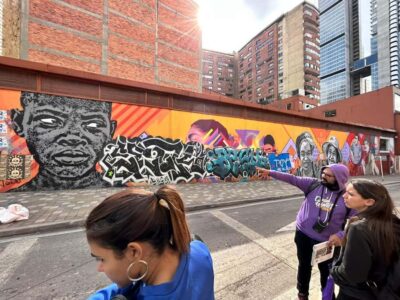 ★ 5.0Graffiti Tour: a fascinating walk through a street art CityFrom $155 reviews
★ 5.0Fun Graffiti Workshop: The Art of Aerosol and ColorFrom $1153 reviews
★ 5.0Graffiti Tour: a fascinating walk through a street art CityFrom $155 reviews
★ 5.0Fun Graffiti Workshop: The Art of Aerosol and ColorFrom $1153 reviews
Browse the lists this tour appears in