
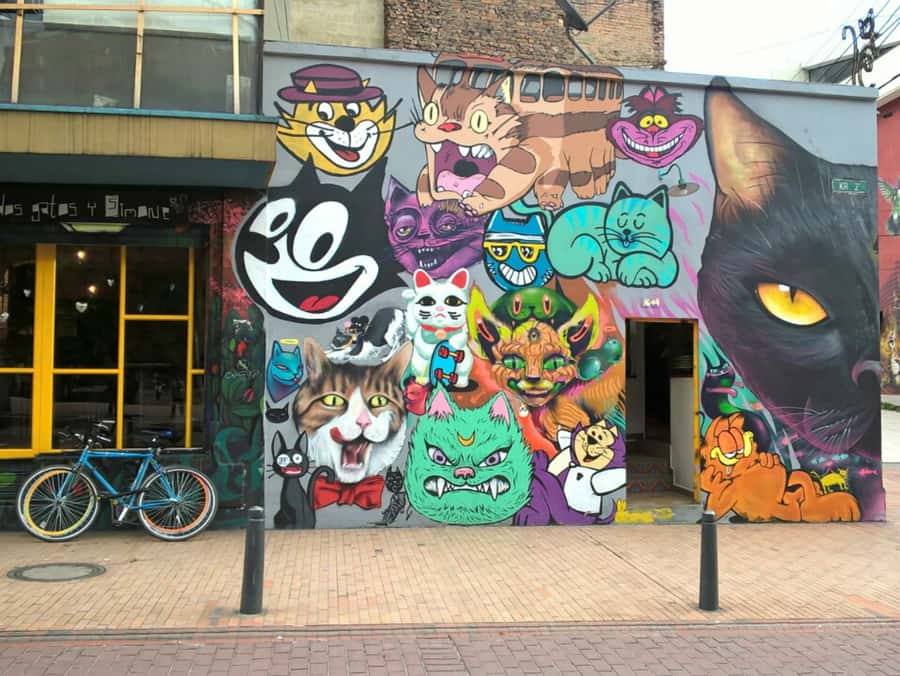
Reviewed · LA CANDELARIA GRAFFITI & STREET ART
Bogotá Street Art and Graffiti Tour 3 Hrs
Street art has a way of turning a city into a classroom. In this Bogotá Street Art and Graffiti Tour, you get that learning moment with downtown street walls, local conversation, and a look at how graffiti became part of everyday Colombian life. The angle is not just who can paint the biggest mural—it’s why the city paints back.
I like two things most: first, the tour includes hotel pick-up and drop-off by private vehicle, so you’re not wasting time figuring out logistics before you even see a wall. Second, you’ll spend real time on the meaning—how artists work legally with businesses, how advertising uses the style, and how graffiti can carry political messages or comfort people after hard chapters.
One consideration: it’s a focused 3-hour outing. If you’re looking for long, slow wandering with zero structure, you might feel a bit paced—so wear comfortable clothes and come ready to move.
In This Review
- Key takeaways before you go
- Why Bogotá graffiti feels personal, not just artistic
- The 3-hour structure: short, active, and easy to fit in
- What the guide teaches: origins, messages, and why it matters
- Legal graffiti and the business deal: why commissioning changes everything
- Politics on walls, and comfort on streets
- Vintage and alternative shop stops: art you can actually take home
- Pubs and meeting locals: how to use that time well
- Price and value: is $86 a fair deal for Bogotá?
- Who should book this tour, and who might want a different plan
- Should you book this Bogotá Street Art and Graffiti Tour?
- FAQ
- How long is the Bogotá Street Art and Graffiti Tour?
- Is hotel pick-up and drop-off included?
- What is the price per person?
- What languages is the guide available in?
- Is this tour wheelchair accessible?
- What should I bring with me?
- Are meals or drinks included?
- Is free cancellation available?
Key takeaways before you go
- Hotel pick-up + private vehicle keeps the focus on art, not transit.
- Origins of graffiti and its role in expression or politics are built into the tour flow.
- Business-commissioned street art gets treated as a strategy, not just decoration.
- You’ll see downtown street art context while stopping at vintage and alternative shops.
- The tour wraps with time to connect in trendy pubs and meet the local vibe.
Hooked on the graffiti walls? More La Candelaria street-art tours to follow

Why Bogotá graffiti feels personal, not just artistic
Graffiti in Bogotá isn’t presented like a stunt or a random hobby. It’s framed as a language—one that can vent frustration, speak about politics, and also brighten days. That matters because graffiti often gets reduced to a controversy abroad, while here it’s treated as one of the ways people communicate emotions and opinions in public.
You’ll also get a sense of how Colombia’s street scene shifted from raw self-expression into something businesses sometimes want to align with. The tour explains how the term and the practice connect to older forms of expression—mark-making that can carry feelings, identity, and protest. Once you understand that, even small details on walls start to read like sentences.
And because you’re traveling through downtown, you’re not only looking at art. You’re looking at art embedded in real city life: storefronts, side streets, and the places where people actually spend time. That’s when it stops feeling like a photo mission and starts feeling like a living conversation.
The 3-hour structure: short, active, and easy to fit in
This is a 3-hour tour with hotel pick-up and drop-off, so it’s built for practicality. Private vehicle transport helps keep the group together and reduces the guesswork of getting around central Bogotá. In a short timeframe, that kind of smooth logistics is worth a lot, especially when you’re not yet used to the city.
The pacing also helps you get more out of the guide. You’re not left alone to interpret walls at random. You move with a bilingual professional guide (Spanish and English) who connects what you see to what it means—origins, legal context, business involvement, and political or emotional themes.
If you like tours that give you a thread to follow—rather than a long list of stops—this format tends to work well. If you’re sensitive to walking or you prefer long museum-style stays, just remember this is downtown street time, so comfy shoes are the real “must bring.”
What the guide teaches: origins, messages, and why it matters
A big part of the value here is the storytelling. The tour explains the origins of the term and ties graffiti to an older idea: marking space to express feelings. From there, you build the key skill that makes street art more enjoyable—the ability to read intention.
You’ll learn how graffiti can function as commentary about Colombia’s politics, but also as a channel for people dealing with trauma. That doesn’t mean every wall is heavy. It means the same medium can hold different emotional loads: outrage, memory, protest, and even small acts of hope.
One review highlights how a guide named Camillo brought depth to the subject and communicated clearly in German, with lots of information. That matches what you want from this kind of tour: not just pointing at images, but helping you understand why certain artists choose the forms they use and how the message travels through the city.
When you get that context, you stop asking whether graffiti is good or bad and start asking a better question: what is the piece trying to say, and what conditions allowed it to exist?
Legal graffiti and the business deal: why commissioning changes everything
A common misconception is that graffiti is always illegal, always chaos. This tour pushes back on that by showing how graffiti artists can work with businesses to brighten the city and avoid mindless tagging.
The practical takeaway for you is this: when a business commissions street art, the work often comes with an expectation of clarity and meaning. Instead of random marks, you can get planned pieces that blend style with messaging—sometimes even designed to match a neighborhood’s visual identity.
The tour also covers advertising campaigns that use street art as a communication channel. That’s a fascinating lens for travelers because it shows you graffiti isn’t only counterculture; it can be a marketing language too. If you’re the kind of person who notices how brands use design, you’ll probably enjoy this section because it turns street art into something you can compare across contexts.
And yes, legal or commissioned doesn’t automatically mean the art becomes harmless. The tour frames it as a trade-off: you still get expression, but you’re seeing how institutions shape what survives on walls. That balance—between voice and permission—is a big part of why Bogotá’s street art scene is so worth learning.
- Bogota: Guatavita and Salt Cathedral Daily Group Tour★ 4.7 · 615 reviews
- Bogotá City Tour with Monserrate, Gold and Botero Museums★ 4.9 · 584 reviews
- Bogota: Zipaquirá Salt Cathedral and Lake Guatavita Day Tour★ 4.8 · 551 reviews
- Bogota Food Tour with over 12 Tastings & Tejo★ 4.9 · 454 reviews
Politics on walls, and comfort on streets
Graffiti can be a megaphone. It can also be a coping mechanism. This tour explains both, in plain terms, without turning the medium into a political lecture that ignores beauty.
You’ll hear how artists use the form to comment on national politics. At the same time, you’ll learn how street art can be a way to brighten the days of people affected by a traumatic past. That combination is what makes Bogotá feel different from places where street art is only treated as decoration or tourism content.
If you’re worried about the tour being too intense, don’t. The point isn’t to dump history on you. The point is to understand why the city uses this visual language at all. Once you see how messages can range from protest to uplift, you start noticing the tone even in pieces that aren’t obviously political.
This also makes your photos better. You’ll be able to photograph with meaning—capturing the elements that relate to message rather than only chasing color.
Vintage and alternative shop stops: art you can actually take home
Part of the experience is not just walls. You also visit vintage and alternative stores while you’re moving through downtown. For me, shop stops like this matter because they turn “interest” into “something tangible.”
You’re likely to find a different kind of Bogotá creativity here—items shaped by design culture, thrift sensibilities, and local taste. Even if you don’t buy anything, the stops give you context for what the neighborhood values besides street walls.
The useful part is the pacing: you’re not only looking at art, you’re seeing how people live with art styles around them. Street art is one layer, but fashion, objects, and shop aesthetics help you understand the same creative mindset in another form.
If you enjoy browsing and you like supporting small sellers, this section adds real value. If shopping stresses you out, you can treat it as a chance to reset—grab water if you need it (meals and drinks are not included), use the break to plan where to wander next.
Pubs and meeting locals: how to use that time well
The tour includes a chance to connect in trendy pubs and other interesting places. This is one of those details that sounds optional until you realize how hard it is to meet locals safely and naturally on your own.
In a short 3-hour window, you get an efficient mix: guided art context first, then a social finish. That order matters. You’ll already have themes to talk about—politics, expression, legal versus illegal work, business commissions. People can respond to those ideas with stories you can’t easily find in guidebooks.
A small practical tip: come with one or two simple questions ready, like how they feel about commissioned graffiti versus tagging, or what parts of the city feel most expressive. The guide can help you translate those topics if your Spanish is still getting its legs under you.
Also, remember this portion still sits inside a tour structure. It’s not a free night out. It’s a focused chance to experience the local hangout vibe that matches what you’ve been learning.
Price and value: is $86 a fair deal for Bogotá?
$86 per person for a 3-hour private-group street art experience is not cheap, but it’s also not random pricing. You’re paying for four concrete things the tour data makes clear:
- A professional bilingual guide (Spanish and English)
- Hotel pick-up and drop-off
- Private vehicle transportation
- Downtown street art interpretation plus shop and pub stops
That combination matters in Bogotá. When transport and guidance are included, you’re buying time and clarity. Without those pieces, you’d still need to get around safely, then figure out what you’re looking at, then piece together where to go for relevant stops.
Meals and drinks are not included, so budget for at least a small extra spend if you plan to have anything during the pub part. But even with that, the tour’s value comes from interpretation and organization more than from a shopping spree.
In short: if you want graffiti with context and you don’t want to spend your morning or afternoon building your own plan, $86 can feel like solid value.
Who should book this tour, and who might want a different plan
This tour is a strong match if you want street art that’s more than scenery. You enjoy guided explanations, you care about meaning behind visuals, and you like the idea of connecting art to politics, business, and everyday life.
It also fits well for:
- First-timers to Bogotá who want an efficient downtown introduction
- Art lovers who like history, but not history that blocks the fun
- Travelers who prefer structured walks with built-in local conversation
You might want to choose something else if:
- You’re looking for a long self-led photo session without stops
- You dislike walking through city blocks for a few hours
- You want meals included in the price (this tour doesn’t)
One more practical note: it’s wheelchair accessible, and it’s a private group, so it’s easier to manage for different needs than a crowded public tour.
Should you book this Bogotá Street Art and Graffiti Tour?
I’d recommend booking if you’re curious about how Bogotá uses street art as communication—emotional, political, and sometimes commercial. The hotel pick-up, bilingual guide, and downtown focus make it easy to do well even if you have limited time.
Book it if you want guided meaning and you’ll enjoy vintage/alternative stops plus a local social finish. Skip it if your idea of a perfect day is slow, unguided wandering with no structure.
If you do book, come with comfortable clothes and an open mind. Street art becomes a lot more fun when you treat it like a conversation, not a decoration.
FAQ
How long is the Bogotá Street Art and Graffiti Tour?
It lasts 3 hours total.
Is hotel pick-up and drop-off included?
Yes. The tour includes hotel pick-up and drop-off.
What is the price per person?
The price is $86 per person.
What languages is the guide available in?
The live tour guide speaks Spanish and English.
Is this tour wheelchair accessible?
Yes, it is listed as wheelchair accessible.
What should I bring with me?
Bring your passport or ID card, and wear comfortable clothes.
Are meals or drinks included?
No. Meals and drinks are not included.
Is free cancellation available?
Yes. You can cancel up to 24 hours in advance for a full refund.
More Tours in Bogota
- Bogota: Bicycle City Tour
★ 4.9 · 2,156 reviews - Zipaquirá: Salt Cathedral Group Tour with Pickup
★ 4.8 · 1,606 reviews - Bogotá: Guided La Candelaria Walking Tour
★ 4.8 · 1,229 reviews - Bogotá: Private City Tour, Monserrate, Emerald and Botero
★ 4.9 · 798 reviews - Bogotá´s Barrios: El Paraíso Favela Tour with Cable Car
★ 4.8 · 731 reviews - Bogota: Guatavita and Salt Cathedral Daily Group Tour
★ 4.7 · 615 reviews
More Tour Reviews in Bogota
- Bogota: Bicycle City Tour
★ 4.9 · 2,156 reviews - Zipaquirá: Salt Cathedral Group Tour with Pickup
★ 4.8 · 1,606 reviews - Bogotá: Guided La Candelaria Walking Tour
★ 4.8 · 1,229 reviews - Bogotá: Private City Tour, Monserrate, Emerald and Botero
★ 4.9 · 798 reviews - Bogotá´s Barrios: El Paraíso Favela Tour with Cable Car
★ 4.8 · 731 reviews - Bogota: Guatavita and Salt Cathedral Daily Group Tour
★ 4.7 · 615 reviews
More La Candelaria Graffiti Tours
- Bogotá: La Candelaria Graffiti & Urban Art Guided Tour
★ 4.7 · 250 reviews - Fun Graffiti Workshop: The Art of Aerosol and Color
★ 5.0 · 73 reviews - Graffiti Tour in La Candelaria Bogotá with Transportation
★ 5.0 · 68 reviews - Bogotá: Graffiti Tour el mejor recorrido de arte urbano
★ 4.7 · 41 reviews - Graffiti Tour in La Candelaria Bogotá with Transportation
★ 4.9 · 24 reviews - Graffiti Tour: a fascinating walk through a street art City
★ 5.0 · 5 reviews
Fresh off the review pile: more Bogotá tours to weigh up

La Candelaria Graffiti & Street Art, compared.
 ★ 4.7La Candelaria Graffiti & Urban Art Guided TourFrom $16250 reviews
 ★ 5.0Fun Graffiti Workshop: The Art of Aerosol and ColorFrom $5873 reviews
 ★ 5.0Graffiti Tour in La Candelaria Bogotá with TransportationFrom $4368 reviews
 ★ 4.7Graffiti Tour el mejor recorrido de arte urbanoFrom $1341 reviews
★ 4.9Graffiti Tour in La Candelaria Bogotá with TransportationFrom $4824 reviews
★ 4.7Graffiti Tour el mejor recorrido de arte urbanoFrom $1341 reviews
★ 4.9Graffiti Tour in La Candelaria Bogotá with TransportationFrom $4824 reviews
 ★ 5.0Graffiti Tour: a fascinating walk through a street art CityFrom $155 reviews
 ★ 3.2Biking in Full Color: Urban Art Bike TourFrom $624 reviews
★ 5.0Fun Graffiti Workshop: The Art of Aerosol and ColorFrom $1153 reviews
★ 3.2Biking in Full Color: Urban Art Bike TourFrom $624 reviews
★ 5.0Fun Graffiti Workshop: The Art of Aerosol and ColorFrom $1153 reviews
Browse the lists this tour appears in