
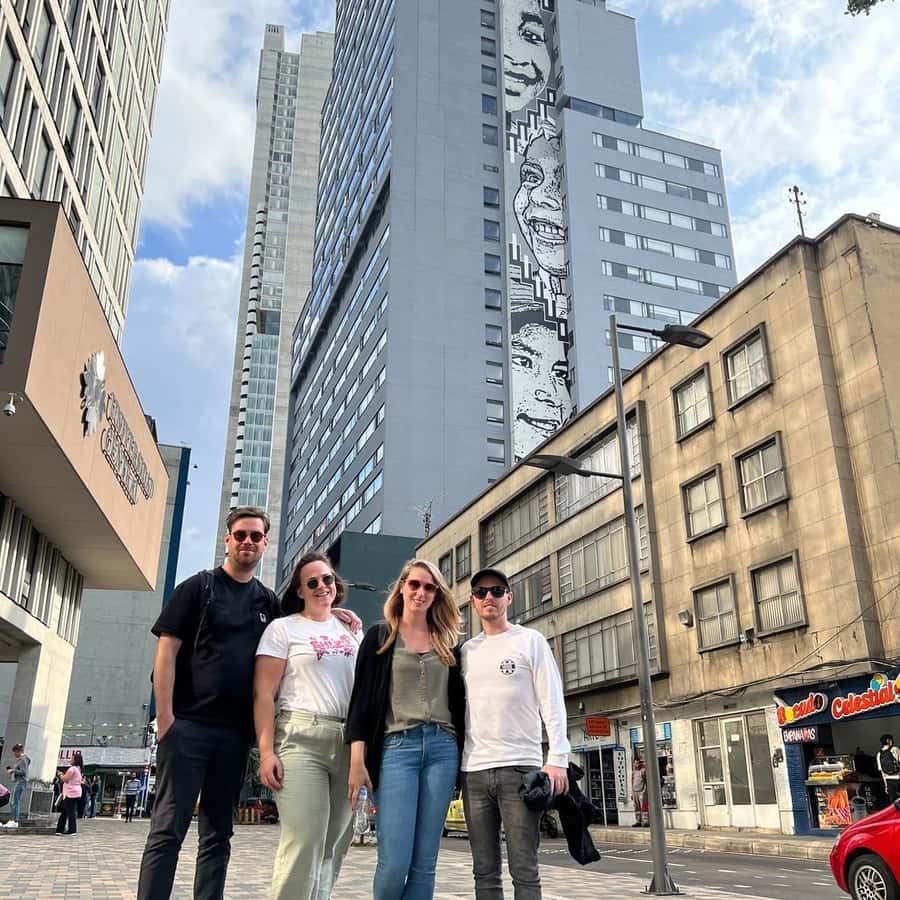
Reviewed · LA CANDELARIA GRAFFITI & STREET ART
Bogotá: Graffiti Tour el mejor recorrido de arte urbano
Street art turns Bogotá into a live textbook. This original Bogotá graffiti tour reads the city through its walls, linking the graffiti movement to artists and to the country’s bigger story. I love the way the guide turns random murals into meaning, with street-by-street context instead of just pretty photos. I also like that the tour is tied to a real urban art initiative that supports artists and communities. The only possible catch: it’s short (about 2 hours), so if you want nonstop stopping for photos, you’ll feel a bit rushed.
You’ll meet at Parque de los Periodistas and head out on foot, learning how to see graffiti with a more informed eye. Guides like Lifred and Ivonne (and names you’ll hear across departures, like Luis, Giovanni, Christian, Fabian, and Yvonne) are praised for answering questions and explaining the why behind the paint.
In This Review
- Key reasons this graffiti tour is such a good use of time
- Why this tour works in Bogotá: walls with context
- Meeting at Parque de los Periodistas: your starting line
- The 2-hour structure: how your walk usually unfolds
- 1) Start with the movement: graffiti as a city language
- 2) Learn to read the art: style, symbols, and intent
- 3) Protest and history: when walls speak loudly
- 4) Collaboration and community: graffiti beyond the artist
- 5) Wrap-up Q&A: make the last minutes count
- Guides who explain, not just point
- What you’ll learn: artists, basics, protest, and social change
- Price and value: why $13 can work well here
- Timing tips: pick the departure that fits your energy
- Language options: English guide, other languages by request
- Who this tour suits best
- Quick practical checklist (so you enjoy it more)
- Should you book Bogotá Graffiti Tour el mejor recorrido de arte urbano?
Key reasons this graffiti tour is such a good use of time
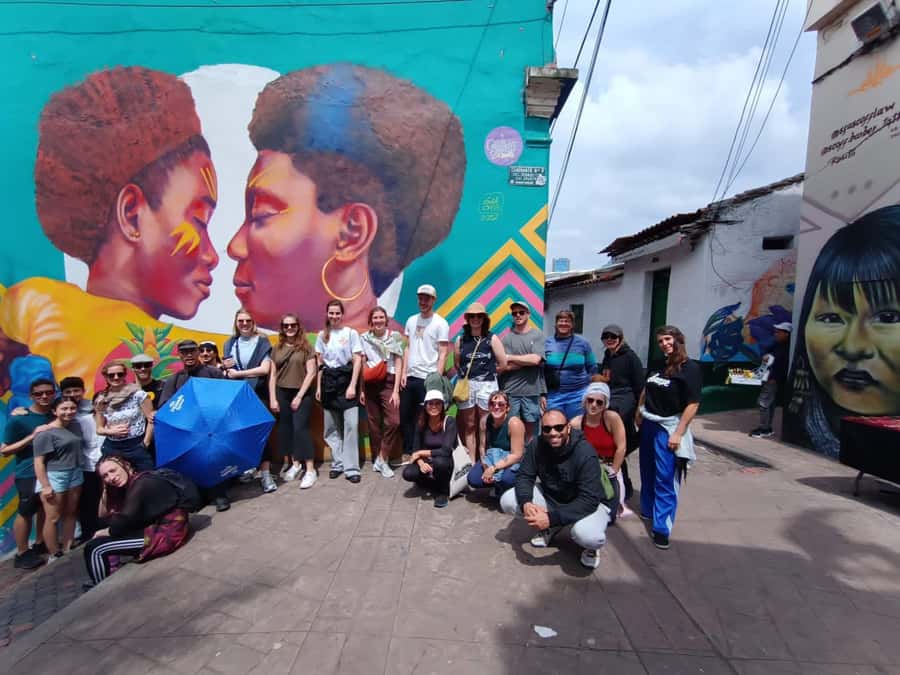
- “Original” focus on Bogotá’s graffiti movement since 2011, not a random street-art stroll
- 2-hour route built around stories, not just locations
- Guides who teach basics, from how to read pieces to protest and collaboration themes
- Community and social impact angle, with support for artists and groups at risk
- Clear schedule options with morning and afternoon departures from the same meeting area
Hooked on the graffiti walls? More La Candelaria street-art tours to follow

Why this tour works in Bogotá: walls with context

Bogotá has a way of making street art feel like it belongs to the city’s heartbeat. This tour leans into that. Instead of treating graffiti like a backdrop, you’re guided to see it as communication—sometimes personal, sometimes political, and often tied to local life.
What makes the experience click is the framing: the guide connects what you see on the walls to the broader graffiti movement and to the relationship between urban art and Colombia’s history. That matters because graffiti can look chaotic if you don’t have a lens. With the lens, you start noticing recurring symbols, different styles, and how artists use public space.
You’ll also pick up a practical skill: how to look. Some tours just point. This one aims to help you interpret. Based on what people highlight in their guides’ Q&A, you’ll likely get explanations that go beyond surface-level description—especially when you ask questions.
Meeting at Parque de los Periodistas: your starting line
The tour meets at Parque de los Periodistas in Bogotá. The schedule details also tie the gathering area to Jimenez Avenue with Carrera 4. In plain terms: arrive early enough to get oriented and to feel calm before you head into the walking part.
Why this matters: graffiti tours live and die by timing. If you show up late, you miss the first set-up where the guide explains how to “read” what’s coming next. That early context can make the rest of the walk feel smoother and more satisfying.
Also, this tour is listed as wheelchair accessible, which is a big plus for anyone who wants the street-art experience without dealing with a bunch of obstacles. Still, since it’s a walking tour, bring whatever you need to feel comfortable outdoors.
The 2-hour structure: how your walk usually unfolds
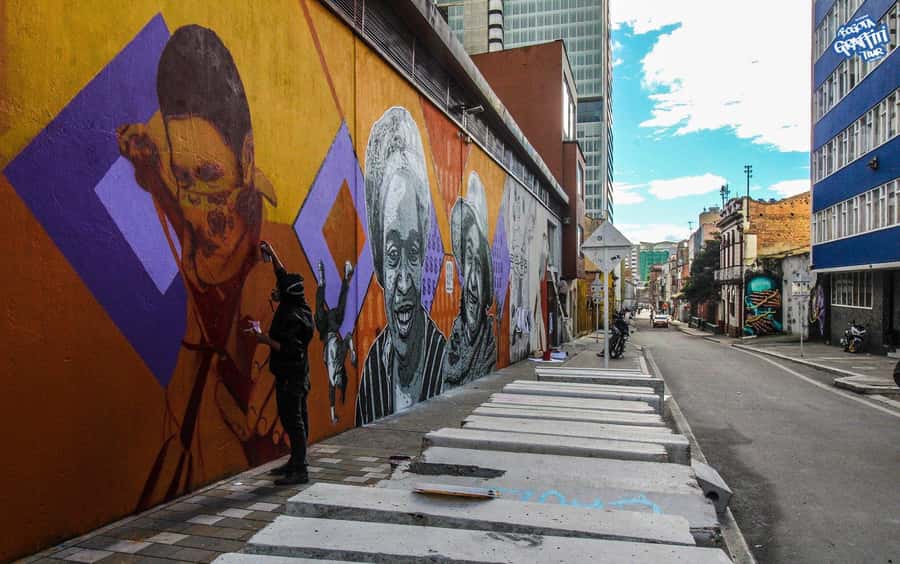
The tour is 2 hours, with departures scheduled in two windows: 10:00am–12:30pm and 2:00pm–4:30pm. (Those longer windows suggest there’s some built-in flexibility on the ground, even if the tour itself is centered around the two-hour mark.)
Even without a stop-by-stop printed itinerary here, you can expect the flow to work like this:
1) Start with the movement: graffiti as a city language
You begin by framing the city’s graffiti story—who’s behind it, why it took root, and how it evolved. The goal is to give you a mental map. When the guide explains the movement first, the walls stop being random.
This is where the tour’s “original” identity matters. Since the project has been operating since 2011, the teaching approach tends to be focused on building understanding rather than just chasing the latest paint.
- Bogota: Bicycle City Tour★ 4.9 · 2,156 reviews
- Zipaquirá: Salt Cathedral Group Tour with Pickup★ 4.8 · 1,606 reviews
- Bogotá: Guided La Candelaria Walking Tour★ 4.8 · 1,229 reviews
- Bogotá: Private City Tour, Monserrate, Emerald and Botero★ 4.9 · 798 reviews
2) Learn to read the art: style, symbols, and intent
Next, you’ll get help noticing details you might otherwise miss. A few guide descriptions in the provided feedback specifically mention sharing street art basics. That usually means you learn how artists build meaning into their work—through tag styles, piece structure, lettering choices, and visual symbols.
You don’t have to become an art critic by the end. But you should finish with better instincts: you’ll look at a wall and ask better questions.
3) Protest and history: when walls speak loudly
A big theme is graffiti as protest and as commentary—plus how that connects to Colombia’s broader history. Guides are praised for explaining the background of street art and the city’s connection to national stories.
This part is often where the tour stops feeling like just “art viewing” and starts feeling like learning. It’s also where you’ll likely have the most follow-up questions, because the meaning behind public art can be complex.
4) Collaboration and community: graffiti beyond the artist
Then the walk shifts toward how graffiti interacts with people and places—especially through collaboration. One guide is specifically noted for talking about collaborative work between artists and building owners.
That thread matters, because graffiti isn’t only about individuals with cans. It’s also about relationships: who allows art on walls, who benefits from it, and how it can affect neighborhoods.
5) Wrap-up Q&A: make the last minutes count
The strongest moments in feedback often mention guides answering lots of questions patiently. So don’t be shy. If you’re curious about a specific style, a political reference, or how graffiti communities form, the guide is there for that.
If you like learning through conversation, this section can be the payoff.
Guides who explain, not just point
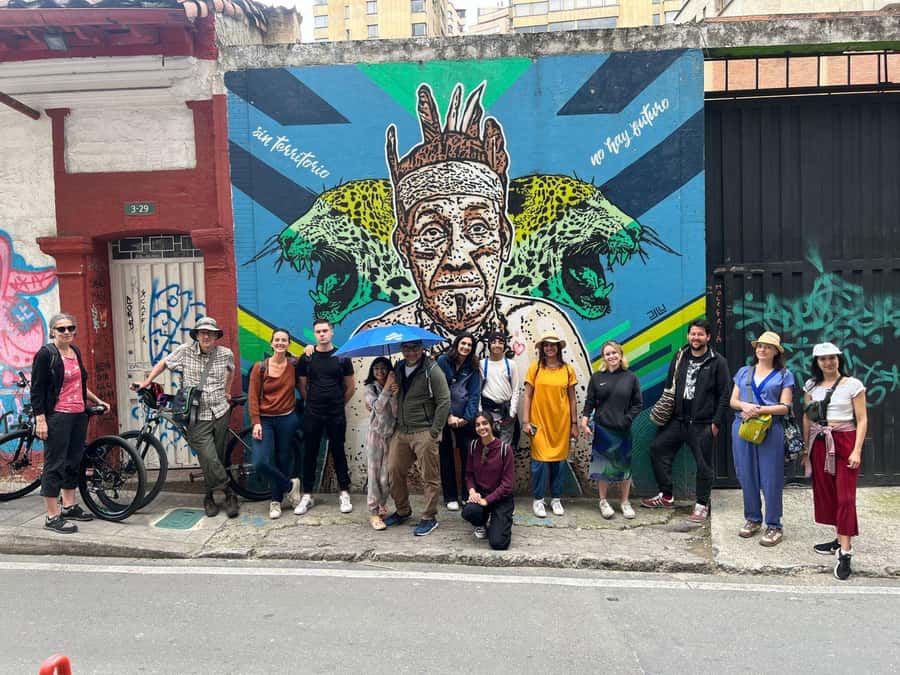
A tour like this is only as good as the guide’s ability to connect what you see to why it exists. Here, the praise is consistent: guides are described as kind, patient, funny, and articulate—while still staying focused on what you can actually observe on the street.
Names that come up in the feedback include Lifred, Ivonne, Luis, Giovanni, Christian, Fabian, and Yvonne. Even if you don’t know which guide you’ll get on your date, the pattern is clear: the guides don’t treat this as a script recitation. They handle questions.
That’s a big deal for English-speaking visitors, because graffiti meaning can depend on local context. If you have even one thoughtful question, a strong guide can turn a normal wall into an explanation you’ll remember.
What you’ll learn: artists, basics, protest, and social change
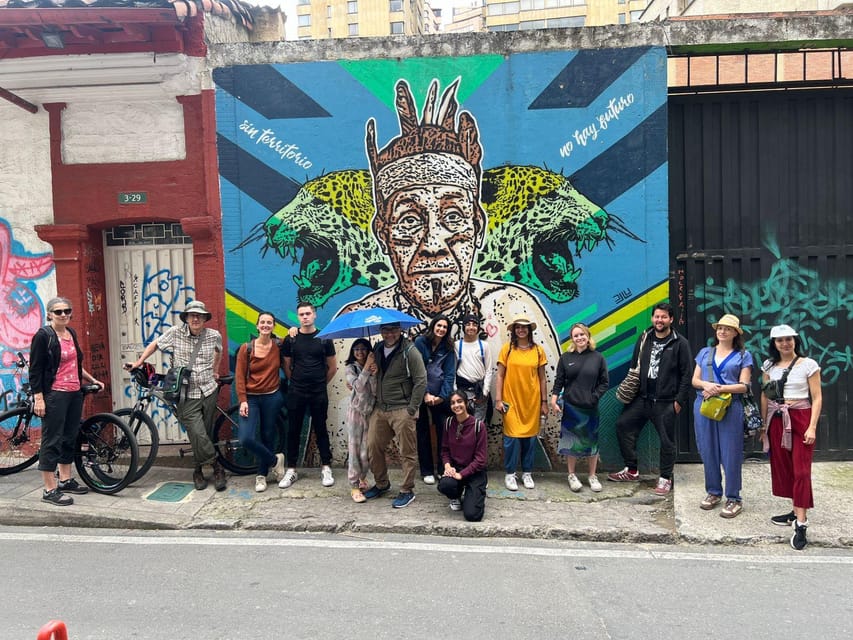
This tour is marketed as a city walk through the walls—telling the story of the Bogota graffiti movement, its artists, and how it relates to the history of the country. But it’s also described as more than a tour.
It’s presented as an initiative that promotes urban art and supports social processes with local, national, and international artists and communities at risk. It also references partnerships with community houses, cultural centers, foundations, district schools, and “graffiti tables” in different locations—using graffiti as a tool for appropriation and change.
You don’t need to memorize that wording. What matters for you is the vibe it creates:
- You’re not just looking at finished street pieces.
- You’re seeing graffiti as part of a system: training, community, and public expression.
- The tour’s narrative helps you understand why some walls feel celebratory while others feel urgent.
The feedback also points out that you’ll learn street art basics. That’s ideal if this is your first graffiti tour or if you’ve only ever seen street art from far away.
Price and value: why $13 can work well here
The price listed is $13 per person for a 2-hour tour. For Bogotá, that’s the kind of cost that fits a tight budget without forcing you to compromise on quality.
Here’s where the value gets interesting:
- You’re getting a licensed guide experience (live guide, English).
- You’re getting a structured city storytelling approach, which usually beats aimless wandering.
- You’re also paying into a project that’s described as supporting artists and social processes.
Also, the offering includes both a free graffiti tour label and a private tour option. That suggests the company runs this in different formats depending on what you need—whether you want to blend into a group or book something more tailored.
Is $13 “cheap”? In some cities, yes. But value isn’t just price. Value is what you learn per minute, and graffiti meaning gets easier when a guide points out what to look for.
Timing tips: pick the departure that fits your energy
The listed departure windows are 10:00am–12:30pm and 2:00pm–4:30pm. With that kind of schedule, I’d choose based on your day plan.
- If you like starting strong and getting your bearings fast, take the morning window.
- If you’re doing museums or neighborhoods earlier and want a creative afternoon plan, the later slot makes sense.
Either way, start by arriving early at Parque de los Periodistas so the intro portion isn’t rushed.
Language options: English guide, other languages by request
The live tour guide is listed as English. The company also notes that you can ask about tours in Spanish, German, and French.
So if you prefer another language, don’t assume it’s available on your exact date. Treat it as: request it early, confirm it, then plan your day.
If you’re traveling with mixed language comfort, English can still work well because the guides tend to connect visuals to explanations. The key is whether you’ll have questions—since the guides in feedback are praised for answering.
Who this tour suits best
This is the kind of experience that fits different traveler types:
- You love art but want the meaning, not just the photos.
- You’re interested in Colombia beyond postcards, with context you can carry forward.
- You want something active but not exhausting—two hours on foot.
- You’re curious about graffiti as protest, community identity, and public conversation.
It may be less satisfying if you only want a quick look at murals with no interest in story or symbolism. This tour is built to explain the why.
Quick practical checklist (so you enjoy it more)
You don’t need special gear, but you’ll enjoy it more if you plan for the realities of a walking street tour:
- Wear comfortable shoes for city sidewalks
- Bring a camera or phone, but expect the guide to slow you down when you’re meant to observe
- Keep a couple questions ready (about specific walls, styles, or how graffiti works socially)
- If you’re sensitive to crowds, pick a time when you prefer calmer travel pacing
Should you book Bogotá Graffiti Tour el mejor recorrido de arte urbano?
Book it if you want a guided, story-driven graffiti experience in Bogotá. The strongest case is the combination of (1) movement-focused storytelling and (2) guides who explain details and answer questions without shutting you down.
At $13 for about two hours, the cost feels fair for what you get: context, interpretation, and a clearer way to see the city’s walls afterward. The added value is the initiative angle—graffiti presented as a tool of community and change, not only street aesthetics.
Skip it only if you’re chasing a very laid-back “walk and look” plan with minimal discussion. This tour works best when you’re willing to learn what the art is saying.
If you want to confirm details for your exact departure, the contact listed is [email protected].
More Tours in Bogota
- Bogota: Bicycle City Tour
★ 4.9 · 2,156 reviews - Zipaquirá: Salt Cathedral Group Tour with Pickup
★ 4.8 · 1,606 reviews - Bogotá: Guided La Candelaria Walking Tour
★ 4.8 · 1,229 reviews - Bogotá: Private City Tour, Monserrate, Emerald and Botero
★ 4.9 · 798 reviews - Bogotá´s Barrios: El Paraíso Favela Tour with Cable Car
★ 4.8 · 731 reviews - Bogota: Guatavita and Salt Cathedral Daily Group Tour
★ 4.7 · 615 reviews
More Tour Reviews in Bogota
- Bogota: Bicycle City Tour
★ 4.9 · 2,156 reviews - Zipaquirá: Salt Cathedral Group Tour with Pickup
★ 4.8 · 1,606 reviews - Bogotá: Guided La Candelaria Walking Tour
★ 4.8 · 1,229 reviews - Bogotá: Private City Tour, Monserrate, Emerald and Botero
★ 4.9 · 798 reviews - Bogotá´s Barrios: El Paraíso Favela Tour with Cable Car
★ 4.8 · 731 reviews - Bogota: Guatavita and Salt Cathedral Daily Group Tour
★ 4.7 · 615 reviews
More La Candelaria Graffiti Tours
- Bogotá: La Candelaria Graffiti & Urban Art Guided Tour
★ 4.7 · 250 reviews - Fun Graffiti Workshop: The Art of Aerosol and Color
★ 5.0 · 73 reviews - Graffiti Tour in La Candelaria Bogotá with Transportation
★ 5.0 · 68 reviews - Graffiti Tour in La Candelaria Bogotá with Transportation
★ 4.9 · 24 reviews - Graffiti Tour: a fascinating walk through a street art City
★ 5.0 · 5 reviews - Bogotá Street Art and Graffiti Tour 3 Hrs
★ 5.0 · 5 reviews
Fresh off the review pile: more Bogotá tours to weigh up

La Candelaria Graffiti & Street Art, compared.
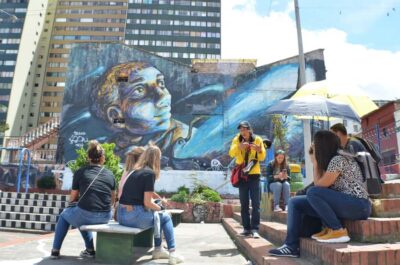 ★ 4.7La Candelaria Graffiti & Urban Art Guided TourFrom $16250 reviews
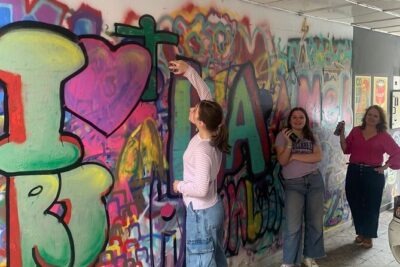 ★ 5.0Fun Graffiti Workshop: The Art of Aerosol and ColorFrom $5873 reviews
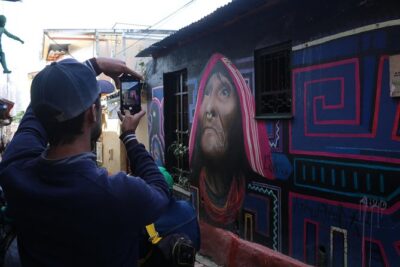 ★ 5.0Graffiti Tour in La Candelaria Bogotá with TransportationFrom $4368 reviews
★ 4.9Graffiti Tour in La Candelaria Bogotá with TransportationFrom $4824 reviews
★ 5.0Graffiti Tour in La Candelaria Bogotá with TransportationFrom $4368 reviews
★ 4.9Graffiti Tour in La Candelaria Bogotá with TransportationFrom $4824 reviews
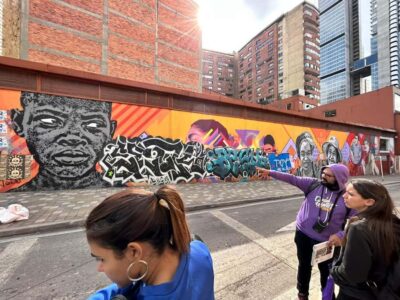 ★ 5.0Graffiti Tour: a fascinating walk through a street art CityFrom $155 reviews
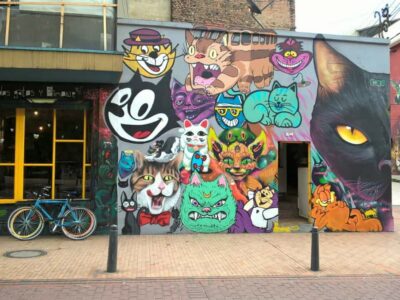 ★ 5.0Bogotá Street Art and Graffiti Tour 3 HrsFrom $865 reviews
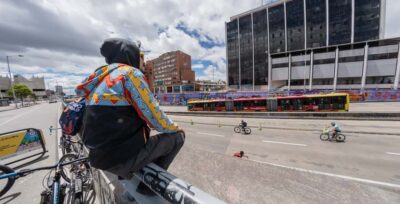 ★ 3.2Biking in Full Color: Urban Art Bike TourFrom $624 reviews
★ 5.0Fun Graffiti Workshop: The Art of Aerosol and ColorFrom $1153 reviews
★ 3.2Biking in Full Color: Urban Art Bike TourFrom $624 reviews
★ 5.0Fun Graffiti Workshop: The Art of Aerosol and ColorFrom $1153 reviews
Browse the lists this tour appears in